Key takeaway
- How XenonStack rebuilt the SantaBanta.com content management system with Go, React, Redis and Kubernetes on AWS for a faster, more reliable site.
A modern content management system lets editors publish quickly while the site stays fast and reliable for every visitor. XenonStack rebuilt the platform behind SantaBanta.com, an entertainment site for visitors of all ages, with a Go backend, a React front end, caching and Kubernetes on AWS, making the site more engaging and far more stable.
What problem did the old content platform create?
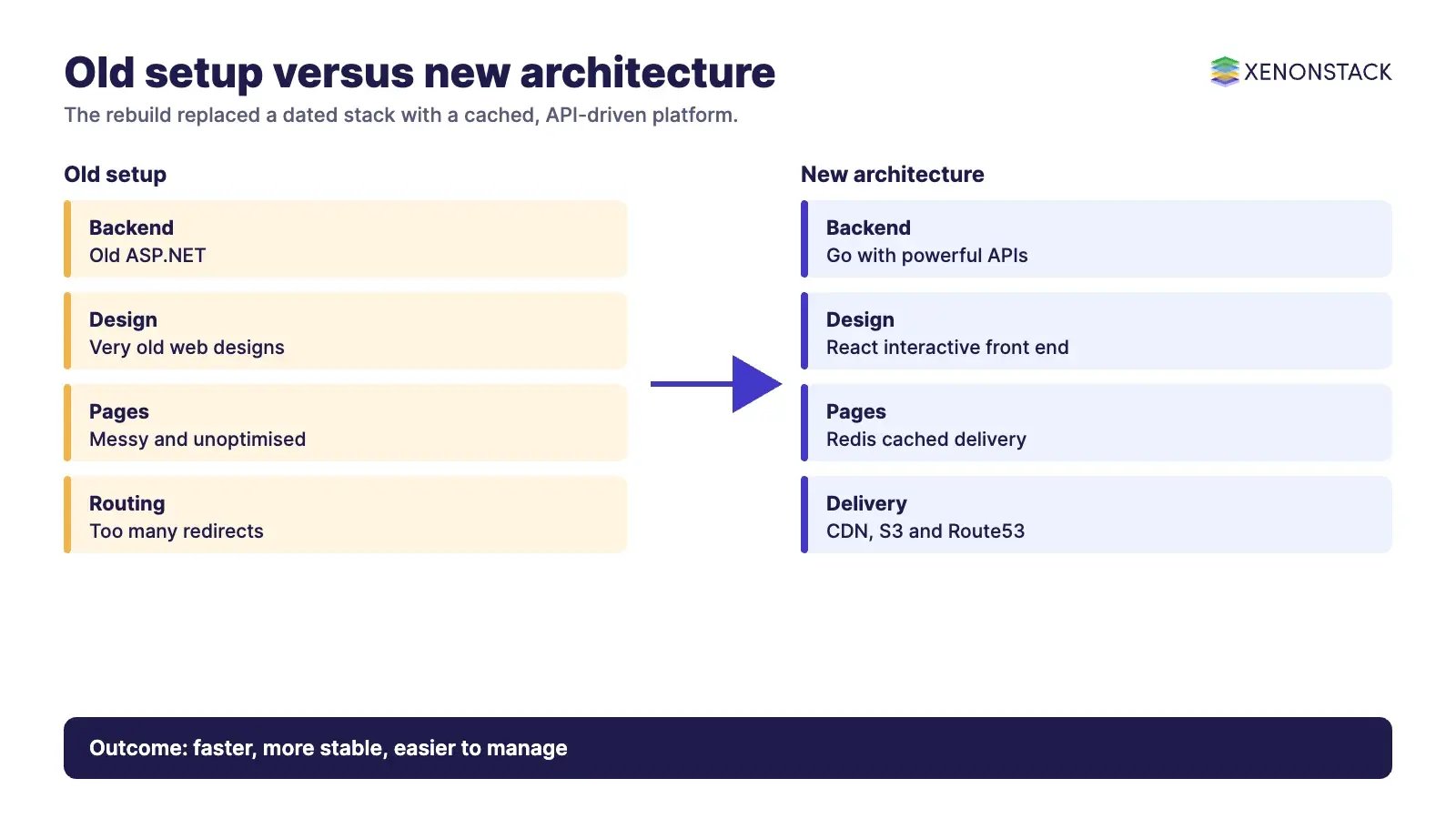
SantaBanta.com reaches a large audience, skewed towards younger users because of the demographic profile of Indian internet users. An ageing platform put that audience experience at risk. The old setup showed several symptoms that held back both visitors and editors.
- Too many redirects.
- Very old web designs.
- Pages that were cluttered and messy.
- No performance optimisation.
- An old backend built on ASP.NET.
- Migration difficulties.
For leadership, the consequence was a site that looked dated, loaded slowly and was hard to change.
How did XenonStack rebuild the platform?
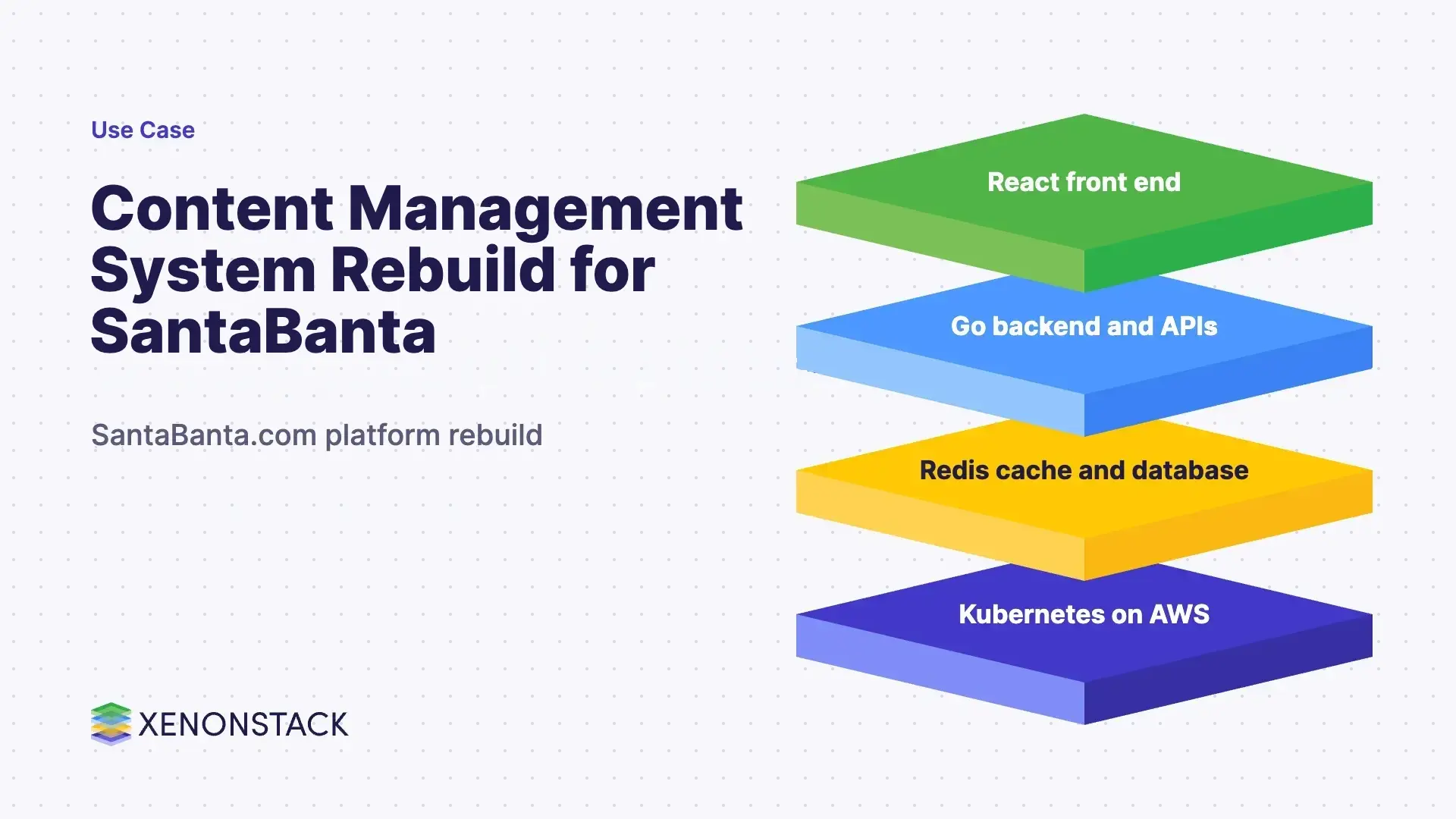
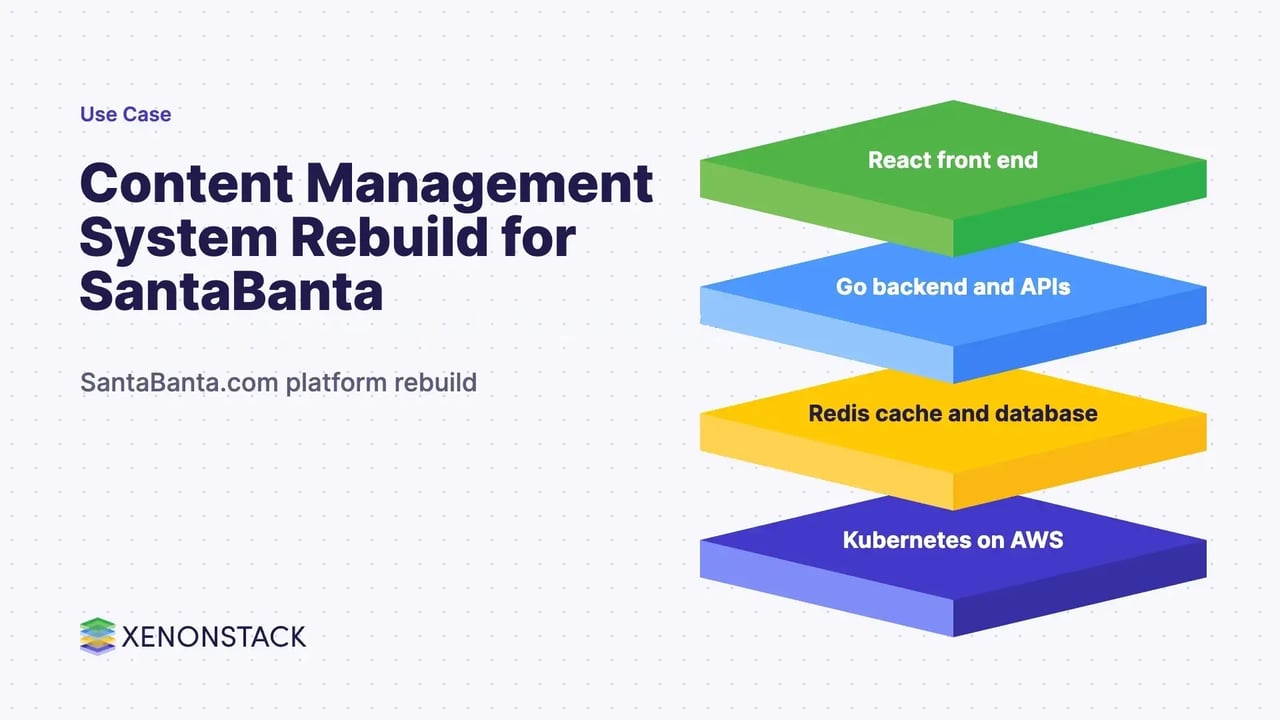
XenonStack combined modern backend and front-end technologies. The new site uses graph database consolidation and Redis caching for post management, a backend written in Go with powerful APIs, and an interactive React front end. A purpose-built content management system handles data and posts on the main website.
| Layer | Technology | Purpose |
|---|---|---|
| Front end | React | Interactive, engaging pages |
| Backend | Go | Reliable, fast APIs |
| Cache | Redis | Quick retrieval of requested pages |
| Database | ArangoDB | Posts and content data |
| Storage and delivery | AWS S3, CDN and Route53 | Media storage, fast delivery and API routing |
| Infrastructure | Kubernetes | Complete deployment of the platform |
How does a request flow through the new architecture?
When a visitor requests a page, such as the wallpaper section, the backend looks in the Redis cache first. If the page is not cached, it fetches the query from the database, and then from the S3 bucket where required.
Based on the request, visitors are routed to either the old site or the new one. At present, the wallpaper and cinema services run on the new architecture, which allows a gradual migration rather than a risky big-bang switch.
What features does the new content management system provide?
The new platform improves the experience for visitors and the working life of editors.
- A new and attractive website design.
- Web stories added to the content mix.
- Better accessibility.
- A reliable, fast and powerful backend.
- Easy management of posts and sections.
- A newly built content management system.
What outcomes matter to decision makers?
The combination of Go, React and a consolidated database improved the overall stability, speed and reliability of the site. Caching keeps frequent requests quick, while Kubernetes and the cloud services make the platform manageable and scalable.
The phased migration is also worth noting. Moving one service at a time lets the team prove the architecture on live traffic before extending it. Organisations that want their content and data to feed governed AI use cases can look at ElixirData, which provides governed context for agents, data and analytics.
When should an organisation replace its content platform?
The right moment is when redirects, dated design and slow pages start to cost audience and editor time, or when the backend technology limits what the team can change. A staged migration reduces the risk.
Teams planning a content platform rebuild can begin with a Context Workshop, a short working session that clarifies content, data and governance needs before any build starts.
Frequently asked questions
What is a content management system?
A content management system is software that lets teams create, organise and publish website content, such as posts and sections, without changing the underlying code for each update.
Which technologies power the new SantaBanta platform?
The platform uses a Go backend with powerful APIs, a React front end, Redis caching, a database layer, AWS S3, a CDN and Route53, all deployed on Kubernetes.
Why is Redis used in the architecture?
Redis acts as a cache, so the backend can serve requested pages quickly and only query the database and S3 bucket when a page is not already cached.
How was the migration handled?
Visitors are routed to the old or new site depending on the request, and the wallpaper and cinema services run on the new architecture first, which allows a gradual migration.
What did the old setup get wrong?
It suffered from too many redirects, very old designs, messy pages, no optimisation, an old ASP.NET backend and migration difficulties.
Ready to put AI agents to work? See an ElixirClaw demo: the agentic OS to build, orchestrate and govern AI agents across your enterprise systems.
Explore the XenonStack platform family: ElixirData · ElixirClaw · ElixirHub · NexaStack · MetaSecure · Neural AI · AgentGRC · AgentSRE · AgentAnalyst · AgentInstruct · AgentRAI · AgentScrum · AgentSearch · AgentForce · AI Aviator · SAIF Aviator · CohortIQ · XenonStack AI · XenonStack UAE