What are your key focus areas? *
AI Workflow and Operations
Data Management and Operations
AI Governance
Analytics and Insights
Observability
Security Operations
Risk and Compliance
Procurement and Supply Chain
Private Cloud AI
Vision AI

Get Started with your requirements and primary focus, that will help us to make your solution
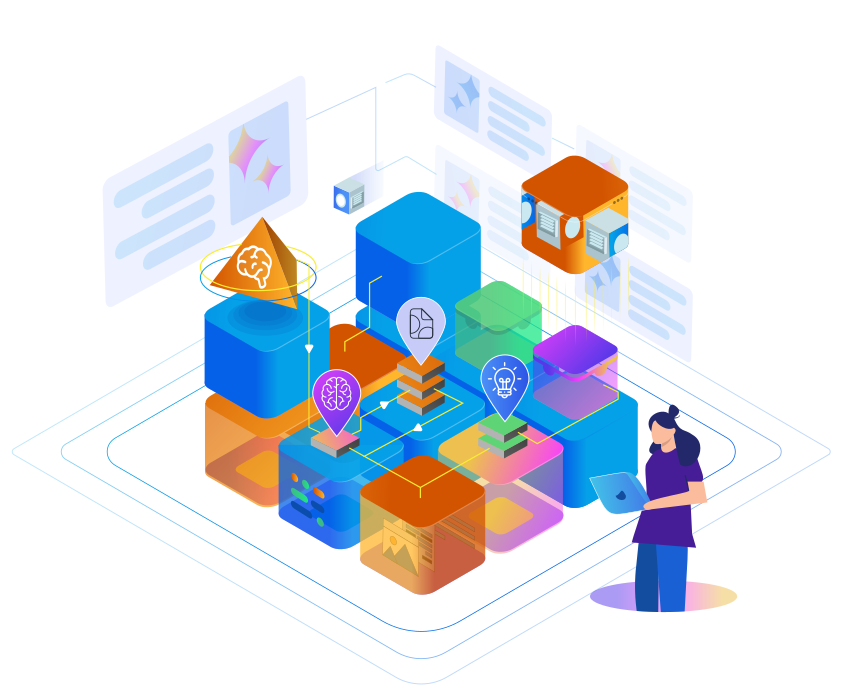
enterprises face alert fatigue due to growing volume and complexity of security threats
not hours: response time with autonomous playbooks vs. manual intervention
threat containment using AI/ML-powered detection and response pipelines
false positives using behavioural analytics and continuous model refinement
Leverages AI and automation to transform traditional security operations into intelligent, self-healing systems
Leverage AI models trained on real-time threat signals, anomaly patterns, and adversarial behavior to surface high-fidelity alerts
Automate triage, containment, and remediation steps using customizable response workflows triggered by confidence scores
Ingest global threat feeds and contextual threat indicators to enhance detection precision and adversary profiling
Assign dynamic trust and risk scores to users, devices, and workloads using behavior analytics, geolocation, and historical patterns
Machine learning, anomaly detection, and predictive models drive every detection, decision, and response

Orchestrate workflows, update rules, and respond to threats in real-time—without waiting for manual action

Allow analysts to validate, tune, or override AI-driven decisions with explainable outcomes

Incorporate feedback loops, honeypot data, and new attack vectors to evolve SOC defenses autonomously
Integrate GuardDuty, CloudTrail, and AWS Security Hub for unified telemetry and incident response automation
Extend threat visibility across endpoints and cloud with native integration into Microsoft Sentinel and Microsoft Defender XDR
Fuse Chronicle logs with AI-driven threat modeling to detect insider threats and lateral movement across Google Cloud workloads
Detect risky behavior by internal users through behavioral baselines, access deviation analysis, and intent prediction
Discover More

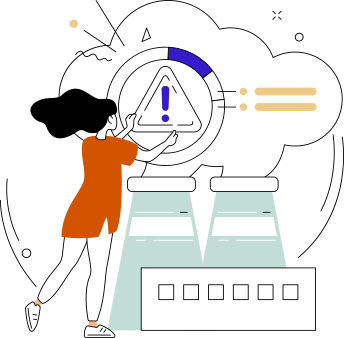
Correlate cloud logs, workload metadata, and network signals to uncover hidden threats across AWS, Azure, and GCP
Discover More
Integrate ServiceNow with AI-driven agents to automate incident management, accelerate response workflows, and unify SOC operations with intelligent ticketing and real-time resolution
Discover More
Monitor industrial and connected devices with protocol-aware agents and real-time anomaly detection models

Build flexible detection and response workflows that adapt to evolving threats and compliance demands
Continuously learn and profile normal vs. suspicious behavior across users, systems, and applications
Generate transparent explanations for AI-driven alerts, increasing analyst trust and response accuracy
Manage detection rules, thresholds, and workflows with Git-based policies and CI/CD for security operations
Run automated red-team simulations and adversarial testing to continuously validate SOC readiness and tooling


Offers transformative benefits by combining AI, automation, and advanced analytics to streamline threat detection and response
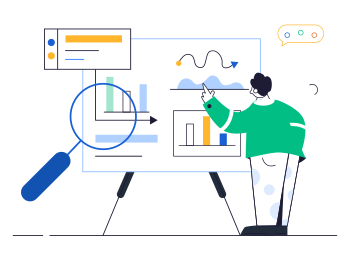
An agentic SOC, also called an autonomous SOC, uses AI agents to triage, investigate and contain threats. XenonStack combines AI-driven analytics, continuous monitoring and agent-based automation for proactive threat defence, with analysts able to validate, tune or override the decisions the agents make.
A threat detection engine trained on threat signals, anomaly patterns and adversarial behaviour surfaces high-fidelity alerts. Autonomous incident response playbooks then automate triage, containment and remediation, with workflows triggered by confidence scores. Threat intelligence feeds add context, and risk scores are assigned to users, devices and workloads.
Human-in-the-loop governance lets analysts validate, tune or override AI decisions, and those decisions are designed to be explainable. Automation runs by default for speed, but analysts keep oversight, and continuous feedback loops help the defences learn from new attack vectors.
It works with AWS GuardDuty, CloudTrail and Security Hub for telemetry and response automation, and with Microsoft Sentinel and Defender XDR across endpoints and cloud. It also uses Google Chronicle logs with AI threat modelling and BeyondCorp, and ServiceNow for incident management and ticketing.
Use cases include zero trust enforcement with identity-aware detection, insider threat detection through behavioural baselines, and cloud threat hunting across AWS, Azure and GCP. It also covers SOC modernisation with ServiceNow AI agents, and operational technology and IoT security using protocol-aware agents and anomaly detection.
Discover how cloud-native architectures enhance SOC agility and scalability—enabling AI-powered threat detection, automated response, and integration across hybrid environments
Explore Further

Explore how edge computing brings real-time security intelligence to the network’s edge—powering faster threat detection and response in distributed and low-latency environments
Explore Further
AI continuously monitors systems for risks before they escalate. It correlates signals across logs, metrics, and traces. This ensures faster detection, fewer incidents, and stronger reliability
 Proactive detection of performance and availability issues
 Root-cause analysis across microservices and environments
 Automated remediation playbooks to reduce MTTR

AI converts camera feeds into instant situational awareness. It detects unusual motion and unsafe behavior in real time. Long hours of video become searchable and summarized instantly
 Real-time detection of suspicious motion or intrusion
 Natural language video search and instant playback
 Smart summaries for audits, investigations, and compliance

Your data stack becomes intelligent and conversational. Agents surface insights, detect anomalies, and explain trends. Move from dashboards to autonomous, always-on analytics
 Connects to warehouses, lakes, and streaming sources
 Question-answering in natural language
 Continuous monitoring for anomalies and KPI deviations

Agents identify recurring failures and performance issues. They trigger workflows that resolve common problems automatically. Your infrastructure evolves into a self-healing environment
 Automated diagnostics for recurring errors
 Playbook execution: restart services, scale pods, clear queues
 Feedback loop for improving remediation strategies

AI continuously checks controls and compliance posture. It detects misconfigurations and risks before they escalate. Evidence collection becomes automatic and audit-ready
 Continuous control checks across infrastructure and SaaS
 Automated evidence collection for audits
 Risk scoring and prioritized remediation recommendations

Financial and procurement workflows become proactive and insight-driven. Agents monitor spend, vendors, and contracts in real time. Approvals and sourcing decisions become faster and smarter
 Real-time visibility into spend and commitments
 Anomaly detection on invoices and vendor performance
 Intelligent workflows for approvals and sourcing decisions


