What are your key focus areas? *
AI Workflow and Operations
Data Management and Operations
AI Governance
Analytics and Insights
Observability
Security Operations
Risk and Compliance
Procurement and Supply Chain
Private Cloud AI
Vision AI

Tell us about you and your priorities so we can prepare the right conversation. It takes about 2 minutes.
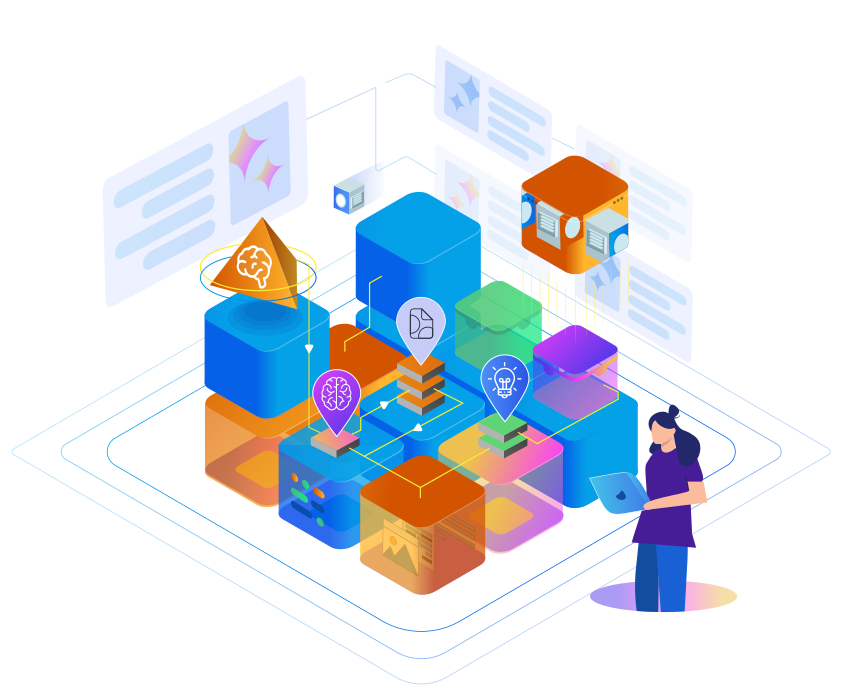
Deploy applications faster with containerized solutions that package code, dependencies, and configurations into portable units
Automatically scale resources based on real-time demand, ensuring optimal performance during traffic spikes and cost savings during low usage
Seamless CI/CD pipeline integration enables faster, more reliable software delivery by automating build, test, and deployment processes
Reduce infrastructure costs through intelligent resource allocation, rightsizing, and automated scaling
Cloud-native solutions are reshaping how businesses operate by enabling faster deployment, greater scalability, and increased flexibility. Built to harness the power of cloud computing and software-defined infrastructure, these solutions support on-demand resources and seamless innovation. By adopting cloud-native technologies, organizations can streamline operations, reduce costs, and stay competitive in an ever-evolving digital landscape
Streamline your software delivery pipeline with automated CI/CD, infrastructure as code, and container orchestration that reduces deployment time from weeks to minutes while ensuring consistent, reliable releases
Build applications that automatically scale up during peak traffic and scale down during quiet periods, optimizing costs while maintaining performance. Leverage Kubernetes and serverless technologies for intelligent resource management
Deploy resilient, self-healing applications across multiple availability zones with automated failover, backup strategies, and disaster recovery that supports high availability and protects against data loss
Reduce cloud infrastructure costs through right sizing, spot instances, reserved capacity planning, and automated resource optimization that aligns spending with actual business needs

Transform monolithic applications into composable, lightweight services that enable rapid development and deployment. Break down complex business applications into manageable components that can be independently developed, tested, and scaled to meet specific industry demands

Deploy applications consistently across any environment with containerized solutions that ensure "build once, run anywhere" capability. Leverage Kubernetes orchestration to automatically manage, scale, and repair containerized workloads for maximum reliability and efficiency

Bridge the gap between development and operations teams through collaborative methodologies that automate infrastructure and software delivery processes. Create a unified culture focused on rapid, reliable application deployment and continuous improvement

Eliminate manual deployment bottlenecks with automated build, testing, and release processes that deliver new features faster and more reliably. Enable continuous integration and delivery that reduces risk while accelerating time-to-market for critical business applications
Implement proven architectural patterns including event-driven design, API gateways, and service mesh technologies for building resilient, maintainable applications
Discover More


Deploy modern data architectures that combine real-time streaming, batch processing, and analytics capabilities for comprehensive data management and insights
Discover More
Implement container-native storage, object storage, and distributed file systems that provide high availability and performance for cloud-native workloads
Discover More
Deploy programmable network infrastructure, load balancing, and service communication that enables secure, observable, and resilient application connectivity
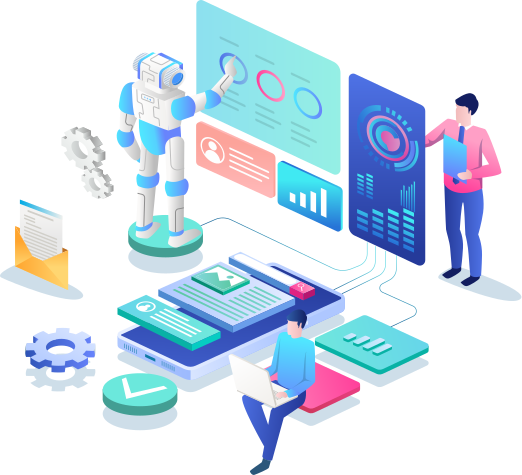


Accelerate innovation, reduce costs, improve reliability, and enable seamless scaling through cloud native development approaches

Autonomous development teams work independently with loosely coupled microservices, dramatically increasing developer productivity and enabling faster feature delivery through streamlined development workflows

Automated build, test, and deployment pipelines enable rapid service delivery with reduced deployment risks, allowing faster time-to-market for new products and features

Infrastructure automation eliminates human error downtime while intelligent load balancing automatically adjusts resources based on demand, optimizing both cost efficiency and performance
Streamlined delivery processes minimize update costs while shared resources and on-demand consumption models significantly reduce overall operational expenses for cloud-native applications
Simplified operational complexity, automated configuration management, and built-in autoscaling with self-healing capabilities ensure consistently high availability and system reliability
Applications run seamlessly across any environment, enabling effortless migration between development, staging, and production without requiring modifications to core application architecture
XenonStack's cloud-native platform engineering offering covers cloud-native application development and modernisation of software with microservices. It is built on four pillars: microservices architecture, container orchestration with Kubernetes, DevOps integration and automated CI/CD pipelines, aimed at accelerating digital transformation for organisations.
XenonStack's cloud-native platform uses Kubernetes for container orchestration, with containerised packaging for faster deployment and auto-scaling based on demand. Applications are built as microservices, so teams can release and scale individual services independently rather than redeploying a single large application each time something changes.
XenonStack's platform engineering offering integrates DevOps practices with automated CI/CD pipelines, so code moves from commit to release through repeatable, automated stages. This supports stable releases and rapid innovation, and it extends to infrastructure as code, so environments can be defined, reviewed and reproduced consistently.
XenonStack's platform engineering addresses software-defined networking and service mesh, API gateways, serverless, and container-native and object storage. It also connects to related services including automated security operations, a self-service developer platform, and Kubernetes, SRE and data managed services for organisations that need broader operational support.
XenonStack's cloud-native platform engineering targets rapid innovation, stable releases, dynamic scaling, cost reduction and flexibility across environments. Auto-scaling matches resources to demand, while DevOps integration and automation reduce manual effort, so technology leaders can modernise applications and still keep delivery predictable.
Implement intelligent, self-healing security systems that automatically detect, analyze, and respond to threats across cloud native environments. Deploy containerized security tools and automated incident response workflows that provide continuous protection without manual intervention
Explore Further

Enable development teams with comprehensive internal platforms that streamline application deployment, infrastructure management, and development workflows. Build standardized environments that accelerate development velocity while maintaining security, compliance, and operational consistency across teams
Explore Further
AI continuously monitors systems for risks before they escalate. It correlates signals across logs, metrics, and traces. This ensures faster detection, fewer incidents, and stronger reliability
 Proactive detection of performance and availability issues
 Root-cause analysis across microservices and environments
 Automated remediation playbooks to reduce MTTR

AI converts camera feeds into instant situational awareness. It detects unusual motion and unsafe behavior in real time. Long hours of video become searchable and summarized instantly
 Real-time detection of suspicious motion or intrusion
 Natural language video search and instant playback
 Smart summaries for audits, investigations, and compliance

Your data stack becomes intelligent and conversational. Agents surface insights, detect anomalies, and explain trends. Move from dashboards to autonomous, always-on analytics
 Connects to warehouses, lakes, and streaming sources
 Question-answering in natural language
 Continuous monitoring for anomalies and KPI deviations

Agents identify recurring failures and performance issues. They trigger workflows that resolve common problems automatically. Your infrastructure evolves into a self-healing environment
 Automated diagnostics for recurring errors
 Playbook execution: restart services, scale pods, clear queues
 Feedback loop for improving remediation strategies

AI continuously checks controls and compliance posture. It detects misconfigurations and risks before they escalate. Evidence collection becomes automatic and audit-ready
 Continuous control checks across infrastructure and SaaS
 Automated evidence collection for audits
 Risk scoring and prioritized remediation recommendations

Financial and procurement workflows become proactive and insight-driven. Agents monitor spend, vendors, and contracts in real time. Approvals and sourcing decisions become faster and smarter
 Real-time visibility into spend and commitments
 Anomaly detection on invoices and vendor performance
 Intelligent workflows for approvals and sourcing decisions