Key takeaway
- A practical guide to 5G in healthcare: the three 5G scenarios, private networks, FDA and HIPAA considerations, challenges and where AI agents fit.
5G in healthcare means using fifth generation mobile networks, public or private, to connect clinicians, patients, devices and systems with the speed, reliability and device capacity each service needs. It is an enabler for monitoring, telehealth, emergency coordination and research, not a clinical outcome in itself.
This guide is for hospital technology leaders, digital health teams and architects deciding where 5G fits. It explains the three 5G scenarios, private networks, regulatory points, risks and the first steps for a pilot.
What does 5G add to healthcare connectivity?
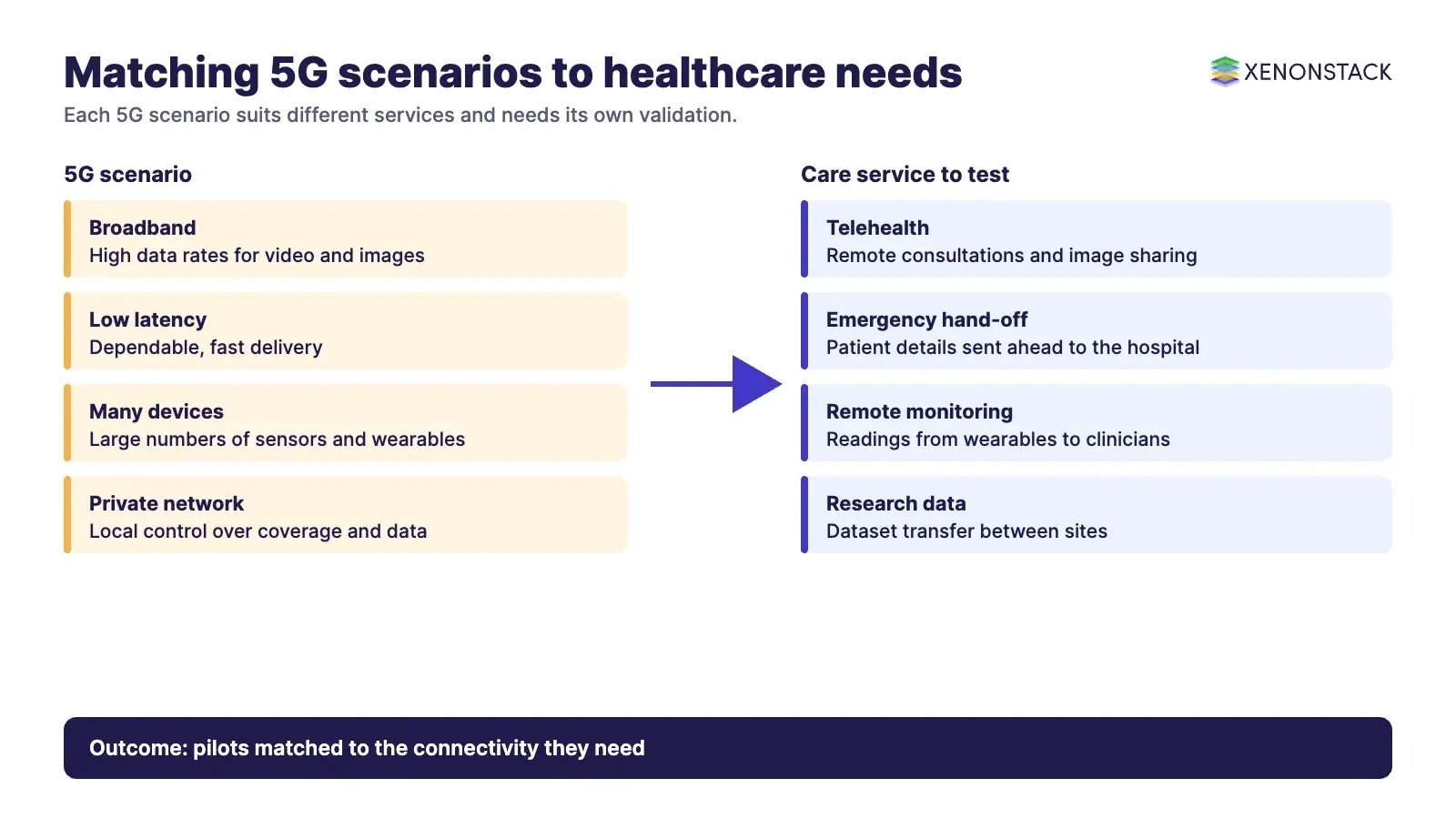
5G is designed around three usage scenarios. ITU names them as enhanced mobile broadband, ultra-reliable and low latency communications, and massive machine-type communications. 3GPP, the body that writes the 5G specifications, describes the same split in its 5G system overview, and notes that the full set of first phase 5G services needs the standalone architecture with the 5G core.
| 5G scenario | What it is for | Healthcare examples to evaluate |
|---|---|---|
| Enhanced mobile broadband | High data rates | Video consultations, large image transfer, remote collaboration |
| Ultra-reliable low latency | Dependable, fast delivery | Emergency data hand-off, time critical remote assistance |
| Massive machine-type | Very many connected devices | Wearables, bed and asset sensors, remote patient monitoring |
The right column lists applications to test, not proven results. Each one needs clinical and technical validation in your own setting. For clinical context, see our article on AI in healthcare.
What is private 5G, and why do hospitals consider it?
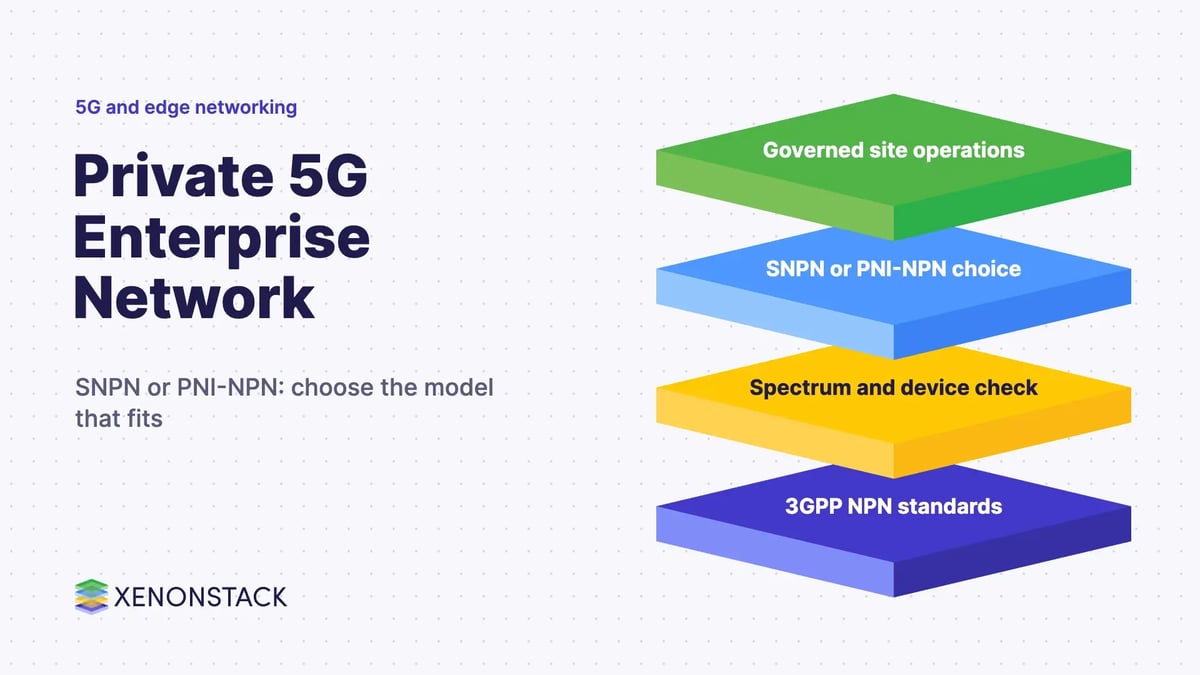
A private network is a non-public network. In its non-public network overview, 3GPP describes a standalone version that does not rely on a public operator's network functions, and a version integrated with a public network, which can take the form of a private slice. 3GPP formally introduced the concept into its normative specifications in Release 16 and links it to cases where data must stay within an organisation.
For a hospital, the attractions are local control over coverage and a clearer view of how the network behaves. The cost is that you take on planning, spectrum arrangements and operations, or buy them as a service. Our guide to building a private 5G network covers the build steps.
Where could 5G be used in care delivery?
Remote monitoring is the clearest fit: wearables and sensors send readings to clinicians over a network that is built for many devices. Telehealth uses the broadband scenario, which matters most for people far from facilities. In emergencies, connected ambulances can send patient details ahead so a team is ready, a case where reliability and coordination count as much as speed. Research teams can move large datasets between sites, and synthetic patient data and AI for security are two areas where that data movement is relevant.
Robotic and augmented reality assisted procedures are often mentioned. Treat them as candidates for controlled trials, since reliability, safety cases and regulatory approval matter more than raw speed. Automation is also reaching hospital operations, as in our piece on RPA centres of excellence.
What do regulators say about wireless medical devices?
The US FDA page on wireless medical devices lists Wi-Fi, Bluetooth and cellular among the radio technologies devices use, and says all wireless technologies face challenges coexisting in the same space, with shared airways risking data loss or disruption. It points to AAMI TIR 69 and ANSI C63.27 for coexistence testing and risk management, and lists security as a consideration for both facilities and manufacturers. The page does not mention 5G and was current as of September 2018, so check for newer FDA guidance.
For patient data, the HHS summary of the HIPAA Security Rule says covered entities and their business associates must implement administrative, physical and technical safeguards to protect the confidentiality, integrity and availability of electronic protected health information. A faster network does not change that duty. Other countries have their own rules, so confirm with your compliance team.
What are the main implementation challenges?
| Challenge | Why it matters | First step |
|---|---|---|
| Investment and operation | Radio, core and skills all need funding | Compare private build, managed service and public network |
| Interoperability | New links must work with existing clinical systems | Inventory devices, protocols and vendors |
| Coexistence and safety | Shared spectrum can disrupt devices | Follow coexistence testing guidance |
| Data protection | Telemetry is health data | Map data flows and safeguards |
| Staff readiness | New tools change workflows | Pilot with one ward or service |
Our overview of digital healthcare and the explainer on edge computing and 5G give further background.
How do AI agents change 5G in healthcare?
Connectivity moves data; agents act on it. An agent can watch device telemetry, check it against care rules, open a task for a clinician and record what it did. Because those actions touch patient safety, every step needs an owner, a policy and an audit trail, and the decision should stay with a human where the stakes are high. Processing near the source also keeps sensitive readings local. XenonStack's NexaStack is inference infrastructure for running models at the edge and in the cloud.
What should you do first?
- Pick one use case, such as remote monitoring for a single condition.
- Write down which scenario it needs: broadband, reliability or many devices.
- Check device coexistence and security guidance before choosing a network.
- Map the patient data flow and the safeguards that apply.
- Run a time boxed pilot with clinical sign-off and a named owner.
To map one care decision your agents make, and the data and policy it depends on, book a Context Workshop. See what happens in the workshop.
Frequently asked questions
What are the three main 5G usage scenarios?
ITU describes them as enhanced mobile broadband, ultra-reliable and low latency communications, and massive machine-type communications.
What is a private 5G network?
It is a non-public network. 3GPP describes standalone versions that do not rely on a public operator's network functions, and versions integrated with a public network, for example through a private slice.
Does 5G remove the need for HIPAA safeguards?
No. The HHS Security Rule summary requires administrative, physical and technical safeguards for electronic protected health information, whatever network carries it.
Does the FDA mention 5G for medical devices?
The FDA wireless medical devices page does not mention 5G. It discusses coexistence and security for wireless technologies in general and was current as of September 2018.
Where should a hospital start with 5G?
Start with one use case, such as remote monitoring, define the connectivity it needs and run a supervised pilot with clinical sign-off.
Follow XenonStack on LinkedIn: XenonStack on LinkedIn for new guides on agentic AI, data and platform engineering.
Ready to put AI agents to work? Explore ElixirClaw, the agentic OS platform to build, orchestrate and govern AI agents.
Explore the XenonStack platform family: ElixirData · ElixirClaw · ElixirHub · NexaStack · MetaSecure · Neural AI · AgentGRC · AgentSRE · AgentAnalyst · AgentInstruct · AgentRAI · AgentScrum · AgentSearch · AgentForce · AI Aviator · SAIF Aviator · CohortIQ · XenonStack AI · XenonStack UAE