Key takeaway
- Stream analytics for IoT ingests sensor data, processes it in real time and drives alerts and predictive maintenance. See the architecture and checks.
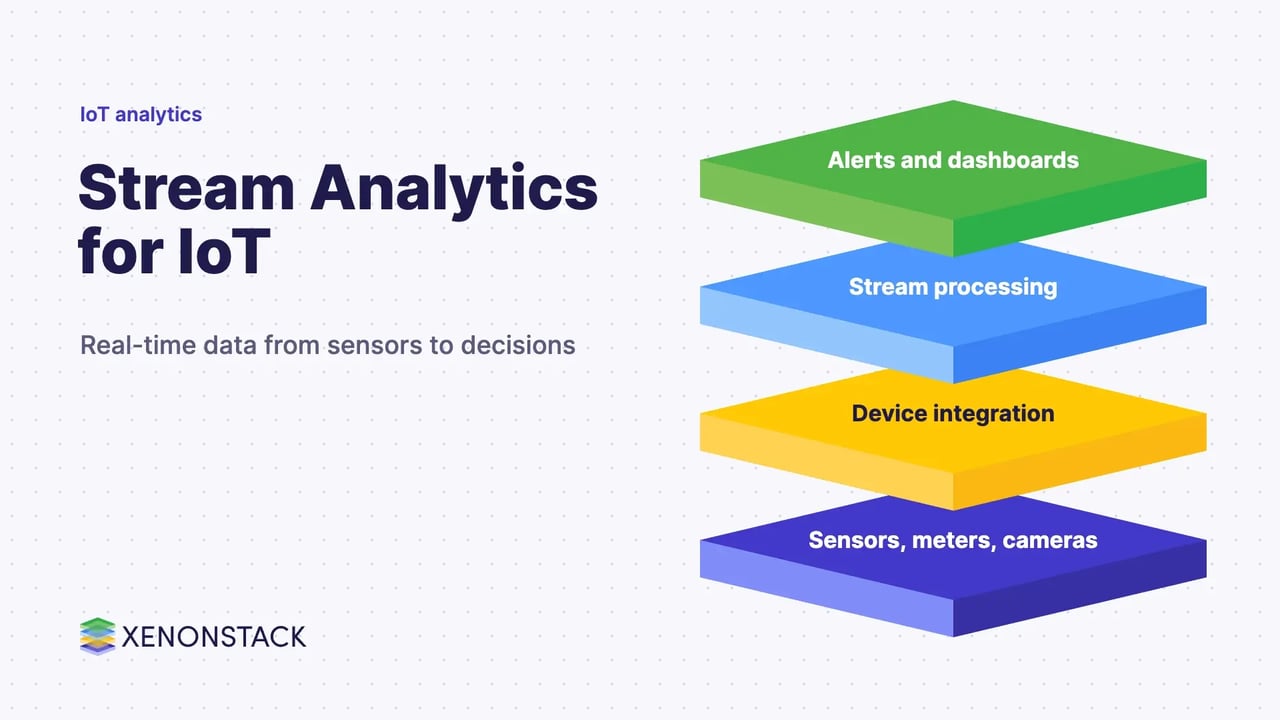
Stream analytics for IoT is the continuous processing of data from sensors, meters and devices as it arrives, so that alerts, dashboards and predictions reflect what is happening now and not what happened yesterday. An IoT data platform connects sources of different data types for real-time streaming and processing, and adds preventive and predictive maintenance using machine learning and deep learning.
This page is for engineering and operations teams planning an IoT data platform. It covers the problem, the platform building blocks, a comparison of batch and stream processing, where AI agents fit, and what to check before you build.
What is stream analytics for IoT?
Event streaming, as the Apache Kafka introduction describes it, is capturing data in real time from sources as streams of events, storing those streams durably, processing them as they happen or later, and routing them to other systems. IoT stream analytics applies that idea to device data: it monitors events in real time, processes data in chunks as it arrives, and produces actionable insight, event predictions and process automation.
A platform of this kind supports fast data and reactive applications: event-driven design, fault tolerance, and real-time and streaming data for the IoT solution.
What problems does an IoT streaming platform solve?
- Collecting data from many sources, such as home automation devices and security cameras.
- Streaming video and running analytics on it in real time.
- Alerting for managed operations as events happen.
- Inventory and device management for all sensors and equipment.
- Real-time reporting on statistics and usage.
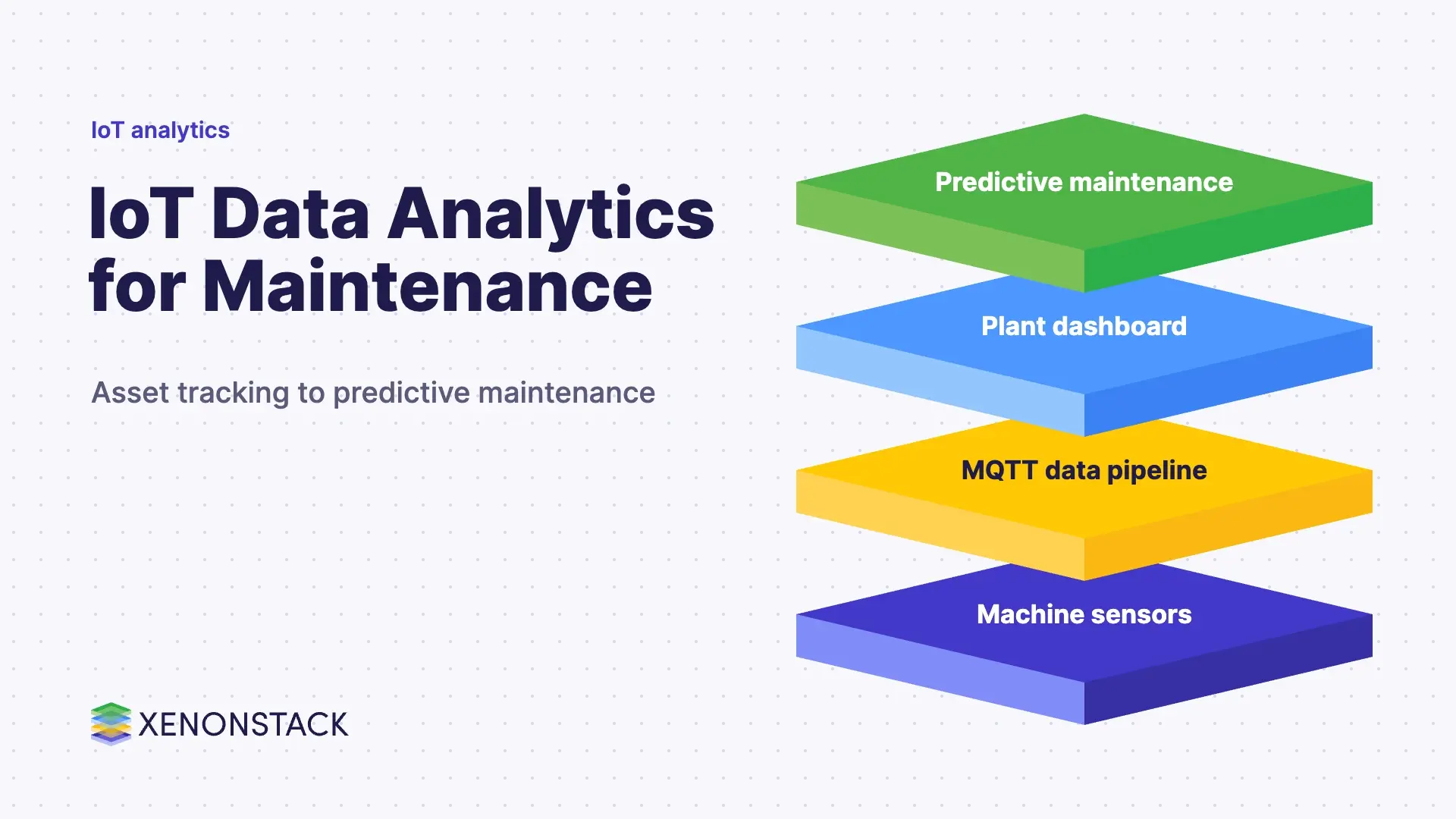
- Predicting equipment failure, as covered in predictive maintenance.
- A highly available, scalable web API that data collectors call at regular intervals, with the API storing data in a database.
- An interactive dashboard for authenticated users to see all statistics and reports.
How does the IoT data platform work?
Data is captured from the conditions under monitoring with different methods and tools, such as wireless temperature sensors, smart thermostats and energy meters. It is transmitted over the internet and stored in the platform database. The main building blocks are:
- Data sources. Energy consumption (electric power usage in kWh from smart energy meters) and temperature (degrees Celsius from wireless temperature tags and sensors).
- Integration and device management of the sensors and security cameras.
- Real-time alerting, scheduler and reporting tool.
- Interactive dashboard for data visualization and analysis, with automatic notifications when set conditions are met.
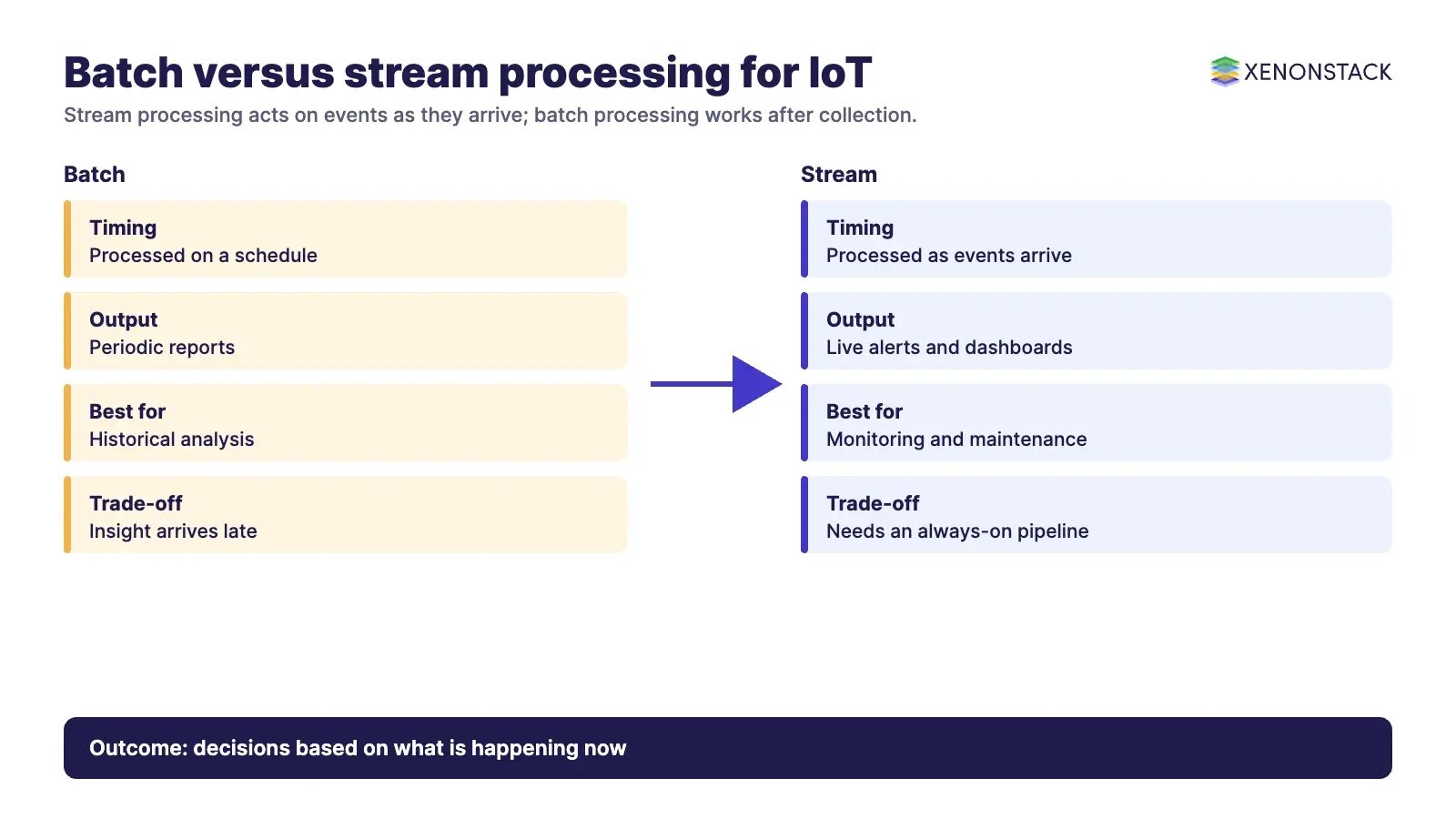
How is stream processing different from batch processing?
| Question | Batch processing | Stream processing |
|---|---|---|
| When data is processed | On a schedule, after it is collected | Continuously, as events arrive |
| Typical output | Periodic reports | Live dashboards, alerts and event predictions |
| Best for | Historical analysis and reconciliation | Monitoring, alerting and predictive maintenance |
| Main trade-off | Insight arrives late | Needs a reliable, always-on pipeline |
You rarely choose one only. Availability of batch and real-time data together lets historical records train models while the live stream applies them.
Where do AI agents fit?
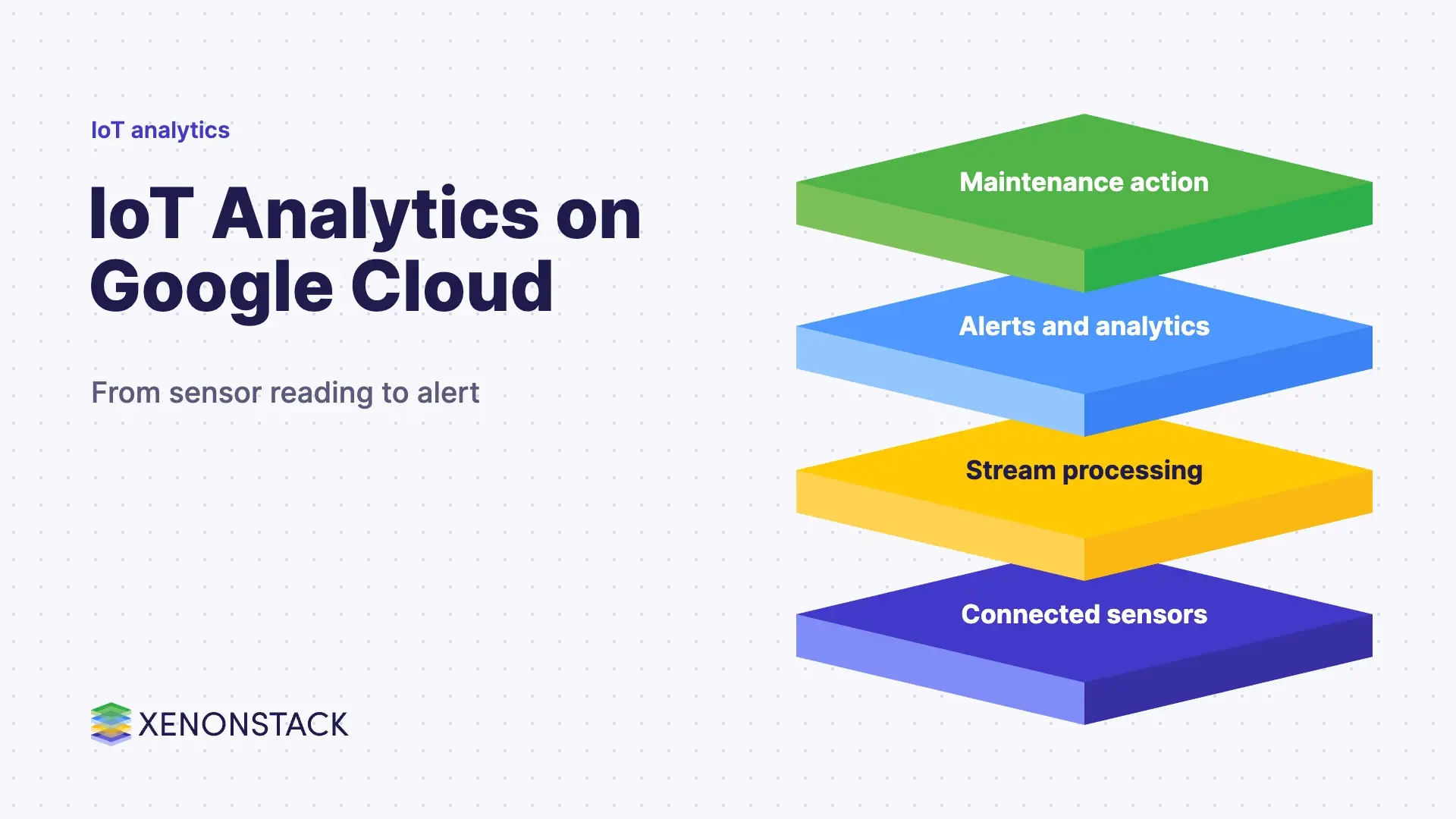
Streaming pipelines produce alerts faster than people can read them. An AI agent can sit after the alerting step: group related alerts, check them against device history, open a maintenance task, and ask a person to approve before anything changes on the plant floor. The same pipeline pattern also serves other real-time decisions, such as fraud detection. For cloud deployment of the analytics itself, see IoT analytics. ElixirData is XenonStack's Context OS for the data and policy such agents depend on.
To map one decision your agents make, and the data and policy it depends on, book a Context Workshop. See what happens in the workshop.
What should you check before building an IoT stream analytics platform?
- List the devices, data types and sampling intervals, and decide which events need a response in real time.
- Decide what is processed near the device and what goes to the cloud.
- Plan device identity, authentication and inventory before the first sensor connects.
- Define who receives each alert and what they may do about it.
- Choose the retention period for raw and processed data.
- Start with one use case, such as one asset class for predictive maintenance, and measure it against your current process.
Frequently asked questions
What is stream analytics in IoT?
It is the continuous processing of device and sensor data as it arrives, so that alerts, dashboards and predictions are based on current events.
What data sources does an IoT stream platform use?
Typical sources include smart energy meters, wireless temperature sensors, smart thermostats and security cameras, integrated through device management.
What is the difference between stream and batch analytics?
Batch processing works on collected data on a schedule, while stream processing works on events as they arrive. Many platforms use both.
How does stream analytics support predictive maintenance?
The live stream carries condition data from equipment into models that estimate when a fault is likely, and the alerting layer tells the right people before the failure.
Where do AI agents fit in IoT stream analytics?
An agent can group alerts, check them against device history, open a maintenance task and ask a person to approve it.
Ready to put AI agents to work? See an ElixirClaw demo: the agentic OS to build, orchestrate and govern AI agents across your enterprise systems.
Explore the XenonStack platform family: ElixirData · ElixirClaw · ElixirHub · NexaStack · MetaSecure · Neural AI · AgentGRC · AgentSRE · AgentAnalyst · AgentInstruct · AgentRAI · AgentScrum · AgentSearch · AgentForce · AI Aviator · SAIF Aviator · CohortIQ · XenonStack AI · XenonStack UAE