Key takeaway
- A digital operations platform unifies applications, data and processes into one view. See how it is defined, where it is used and how AI agents change it.
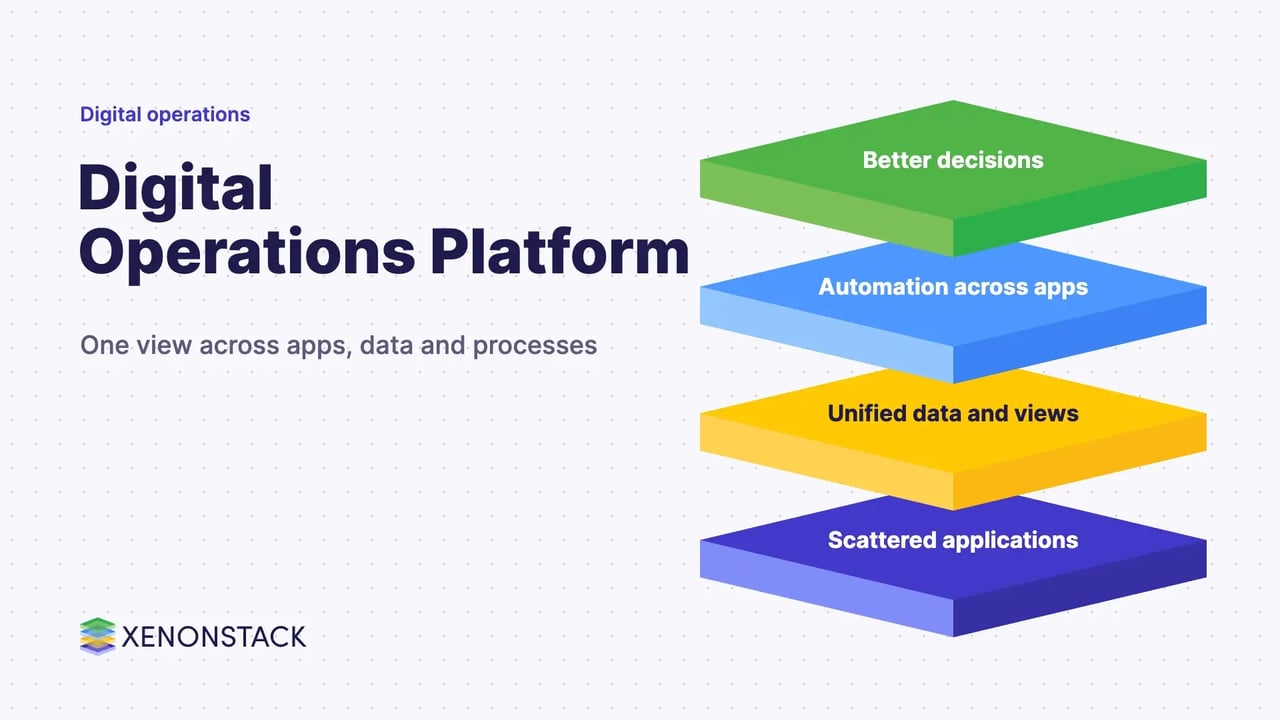
A digital operations platform is software that brings an organisation's digital applications, data and operational processes into one place so teams can see, manage and improve them together. The term is descriptive rather than a single standardised product category, so vendors and analysts use it in slightly different ways.
This guide is for operations, IT and digital leaders who are dealing with scattered applications and data silos. It explains the idea, the problems it addresses, where it is used and how AI agents change the picture, and it links to our guides on the digital platform strategy and big data platform.
What is a digital operations platform?
Two published definitions help frame it. Netenrich's glossary defines digital operations as "the processes and activities organizations develop and implement to manage and optimize their digital technologies and resources." Cognizant's glossary defines a digital platform as "the software and technology used to unify and streamline business operations and IT systems."
Put together, a digital operations platform is the layer that unifies the systems an organisation runs and gives the people responsible for them one working view. It is not a replacement for each application. It sits across them.
Why do organisations need one?
As organisations add applications, each one holds its own data and its own view of the business. Teams then switch between interfaces to find information and move it by hand from one place to another. This is the data silo problem. A platform aims to reduce that by connecting the systems, so that a question about customers, stock or a process can be answered from one place.
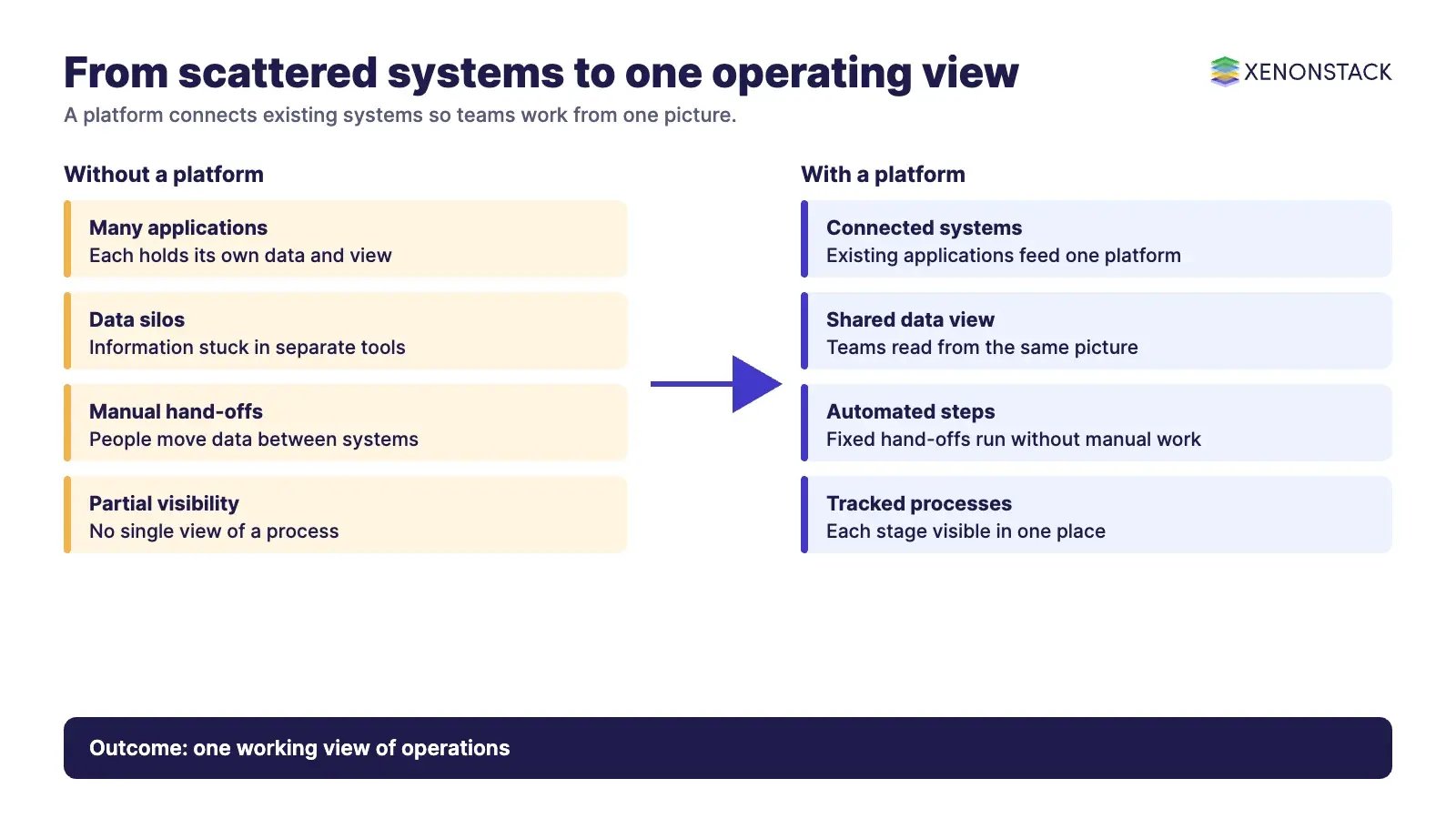
Cognizant's glossary says a platform helps companies create intelligence to improve operations and to inform business and product strategy, and says uniform business processes make workflows clearer and more efficient. Netenrich lists streamlined operations, higher productivity and better customer experiences among the benefits of digital operations. Treat these as the goals a platform is meant to serve and measure them in your own environment rather than assuming them.
How is a digital operations platform different from related terms?
| Term | Main focus | How it relates |
|---|---|---|
| Digital operations | The processes and activities used to manage digital technologies and resources | The practice a platform supports |
| Digital platform | Software that unifies business operations and IT systems | The broader category a digital operations platform belongs to |
| Digital operations platform | A unified view and control of applications, data and operational workflows | The operations-facing use of a digital platform |
| Big data platform | Storing and processing large data sets with data tools in one package | Can feed the data a digital operations platform shows |
What are the main capabilities to look for?
Because the term is used loosely, judge a product by what it does for your operations. Netenrich describes digital operations activities such as managing online platforms and applications, analysing data and implementing automation. Those map to four questions worth asking of any platform.
- Connection: can it read from the applications and databases you already run?
- Visibility: can teams track and view each stage of a process in one place?
- Automation: can it remove manual hand-offs between applications?
- Governance: can you see who changed what, and control who can act?
Where is a digital operations platform used?
Typical uses follow from the capabilities above. In production tracking, a platform can follow work from raw material through manufacture to delivery and show the measures the business cares about. In IoT and edge settings, it can gather device and sensor data in one place and set it beside historical records held in back-office systems. In customer operations, it can connect sales, stock and service data so teams work from the same picture. These are examples of how the idea applies, not measured results.
How do AI agents change digital operations?
A traditional platform shows people the state of operations and runs the workflows someone has defined. AI agents add the ability to read that state, reason about it and take steps across applications, such as reconciling records or raising an alert with context attached. That raises the bar on data quality and governance, because an agent acts on whatever the platform tells it. Teams that want governed context for agents can look at ElixirData, XenonStack's Context OS. Related reading: our guides on DevOps on Google Cloud Platform, Google Cloud Platform serverless, MLOps and digital coupons.
What should you do first?
- List the applications and data stores your operations depend on, and who owns each.
- Pick one end-to-end process where hand-offs between systems cause the most delay.
- Define the few measures that show whether that process improves.
- Connect the systems for that process first and check data quality before adding automation.
- Agree who approves changes and how actions are recorded before agents take part. Our digital platform engineering services page describes the engineering side.
To map one decision your agents make, and the data and policy it depends on, book a Context Workshop. See what happens in the workshop.
Frequently asked questions
What is a digital operations platform?
It is software that unifies an organisation's applications, data and operational processes so teams can view and manage them together. The term is descriptive and used differently by different vendors.
How does it differ from a digital platform?
Cognizant defines a digital platform as software and technology used to unify and streamline business operations and IT systems. A digital operations platform applies that idea to running operations.
Does it replace existing applications?
No. It connects to the applications and data stores you already use and gives teams a shared view across them.
What problem does it mainly address?
Data silos and manual hand-offs between applications, where teams switch interfaces to find and move information.
Ready to put AI agents to work? See an ElixirClaw demo: the agentic OS to build, orchestrate and govern AI agents across your enterprise systems.
Explore the XenonStack platform family: ElixirData · ElixirClaw · ElixirHub · NexaStack · MetaSecure · Neural AI · AgentGRC · AgentSRE · AgentAnalyst · AgentInstruct · AgentRAI · AgentScrum · AgentSearch · AgentForce · AI Aviator · SAIF Aviator · CohortIQ · XenonStack AI · XenonStack UAE