.webp?width=1921&height=622&name=usecase-banner%20(1).webp)
What is Health Care Data in Healthcare Data Analytics?
Health data is any information on a person's or population's health. It is derived from various health information systems (HIS) and other technology instruments used by health care practitioners, insurance companies, and government agencies.
Health data includes patient records, diagnostic reports, treatment plans, medical imaging data, and operational healthcare information collected across hospitals, clinics, insurance providers, and research organizations.
Healthcare Data Analytics enables healthcare institutions to process and analyze this information to improve care quality and operational efficiency.
Key Takeaways
- Healthcare generates massive, multi-source data volumes — from EHRs and imaging systems to genomics and billing — but most organizations lack the analytical infrastructure to extract operational value from it.
- The core problem is not data scarcity — it is data fragmentation and interoperability failure: patient records, lab results, imaging data, and insurance data exist in disconnected systems with incompatible standards.
- Healthcare Data Analytics encompasses three analytical methods: small data analytics, real-time analytics, and predictive modeling — each suited to different operational and clinical use cases.
- For CDOs and Chief Analytics Officers: the healthcare data challenge is a data architecture problem before it is an analytics problem — interoperability, standardization (HL7, FHIR, SNOMED, ICD), and unified data pipelines must precede meaningful analysis.
- For Chief AI Officers: predictive modeling in healthcare is the highest-leverage AI investment — enabling proactive clinical intervention at scale rather than reactive treatment after deterioration.
- Organizations that build structured analytical capabilities across clinical, operational, and financial data move from reactive care delivery to evidence-based, proactive health management.
What is Healthcare Data?
Healthcare data is information related to patient health collected from medical systems, devices, healthcare providers, and insurance organizations.
What Is Healthcare Data — and Where Does It Come From?
Healthcare data is any information related to a person's or population's health status, care history, or clinical outcomes. It is collected across a broad set of systems and sources:
- Patient records and EHRs: Clinical encounters, diagnoses, medication histories, treatment plans
- Diagnostic and imaging data: Radiology, pathology, and lab reports — including high-volume imaging files from PACS systems
- Genomic and proteomic data: Molecular-level patient profiles foundational to personalized medicine
- Operational data: Hospital workflows, supply chain records, staffing, scheduling, and billing
- Insurance and claims data: Coverage records, reimbursement history, and population health metrics
The volume is significant and accelerating. Clinical genomics alone can generate over 2TB per patient. A single organ scan takes approximately one second and delivers close to 10 GB of raw imaging data to hospital storage systems. Without structured analytics pipelines, this data accumulates as an operational liability rather than a clinical asset.
Why is Healthcare Data Analytics important for enterprises?
Healthcare Data Analytics helps healthcare organizations manage large volumes of medical data and improve clinical decision-making, operational efficiency, and patient outcomes.
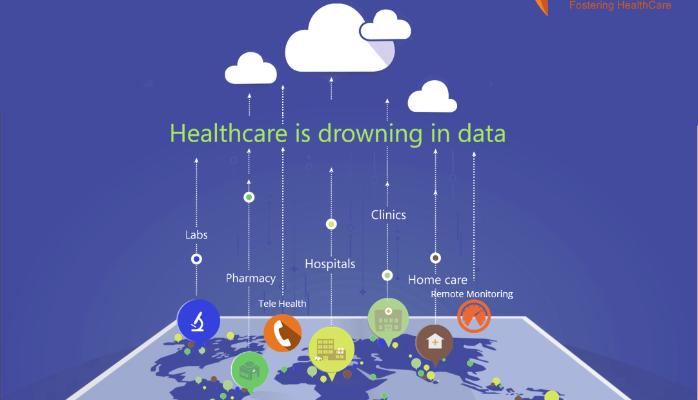
Why Are Healthcare Organizations Drowning in Data Despite Having EHRs?
The Problem
Electronic Health Records were designed to solve the data fragmentation problem. In practice, they have partially addressed data capture while creating new operational burdens. Clinicians managing a single patient encounter must simultaneously document the visit, enter coded diagnoses (ICD), log medications and prescriptions, order tests, update problem lists, and manage referrals — tasks previously distributed across multiple administrative staff.
The result: shortcuts, incomplete entries, and data quality degradation at the point of input. EHR data is often incomplete, inconsistently coded, and not interoperable with adjacent systems.
Why Interoperability Remains the Foundational Gap?
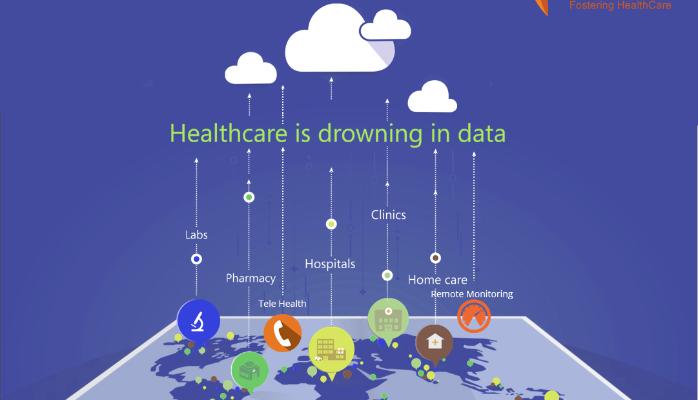
Healthcare data does not fail at generation — it fails at exchange. Patient information generated at a hospital does not automatically flow to the specialist clinic, the nursing home, the home care provider, or the insurance platform. Each system operates on its own data model, with its own standards implementation, and its own exchange protocols.
Until interoperability is resolved — across EMRs, Health Information Exchanges (HIEs), care settings, and payer systems — the analytical value of healthcare data cannot be fully realized. Industry standards (HL7 FHIR, SNOMED CT, ICD-10, CPT) exist but are inconsistently implemented, and the cost of integration has not been systematically addressed at an industry level.
The Data Architecture Relevance for CDOs
For Chief Data Officers and VPs of Data & Analytics in healthcare: this is a data governance and pipeline architecture problem that precedes analytics investment. An analytics platform applied to fragmented, non-interoperable source data produces fragmented, unreliable outputs. The sequence matters — data standardization and interoperability infrastructure must be built before predictive models can deliver clinical value.
Why is interoperability important in healthcare data analytics?
Interoperability allows healthcare systems and medical platforms to exchange and interpret patient data across different organizations and technologies.
What Are the Three Methods of Healthcare Data Analytics?
Healthcare data analytics is not a single capability — it operates across three distinct analytical methods, each suited to different clinical and operational contexts:
| Analytics Method | What It Does | Best-Fit Use Case |
|---|---|---|
| Small Data Analytics | Extracts insights from structured, bounded datasets at the practice or department level | Clinic-level performance monitoring, supply utilization, physician productivity |
| Real-Time Analytics | Processes data streams as they are generated to support immediate clinical and operational decisions | Patient deterioration alerts, ER throughput management, medication administration monitoring |
| Predictive Modeling | Uses historical data patterns to forecast future clinical events or operational outcomes | Population health management, readmission risk scoring, chronic disease progression modeling |
Each method addresses a different point in the decision cycle. Small data analytics optimizes current operations. Real-time analytics enables immediate intervention. Predictive modeling shifts the clinical model from reactive treatment to proactive prevention.
For Chief AI Officers: predictive modeling is the highest-leverage AI investment in healthcare — the capability that most directly translates data infrastructure investment into clinical outcomes improvement at population scale.
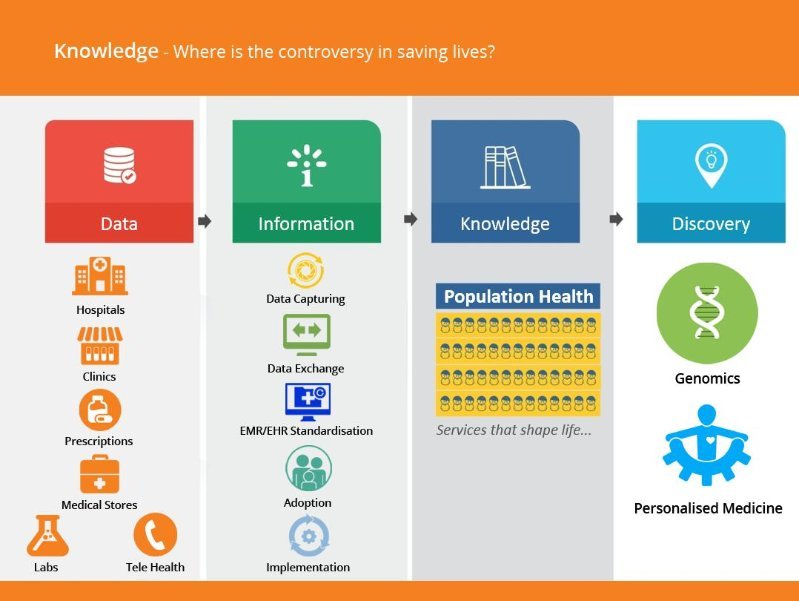 Decisions Through Data: Small data, Predictive modelling expansion, and real-time analytics are three forms of data analytics. Healthcare data will continue accumulating rapidly. If practices, hospitals, and healthcare systems do not actively respond to the flood of unstructured data, they risk forgoing the opportunity to use this data in managing their operations.
Small data and Real-Time Analytics are two methods of data analytics that allow practices, hospitals, and healthcare organisations to extract meaningful information. Predictive modelling is best suited for organisations managing large patient populations. With all three methods, the applicable information mined from raw data supports improvements in the quality of care and cost efficiency. Small Data, Real-Time Analytics, and Predictive Modelling will revolutionise healthcare by increasing opportunities beyond reacting to emerging problems.
What types of healthcare data analytics exist?
Healthcare data analytics includes small data analytics, predictive modeling, and real-time analytics for clinical and operational insights.
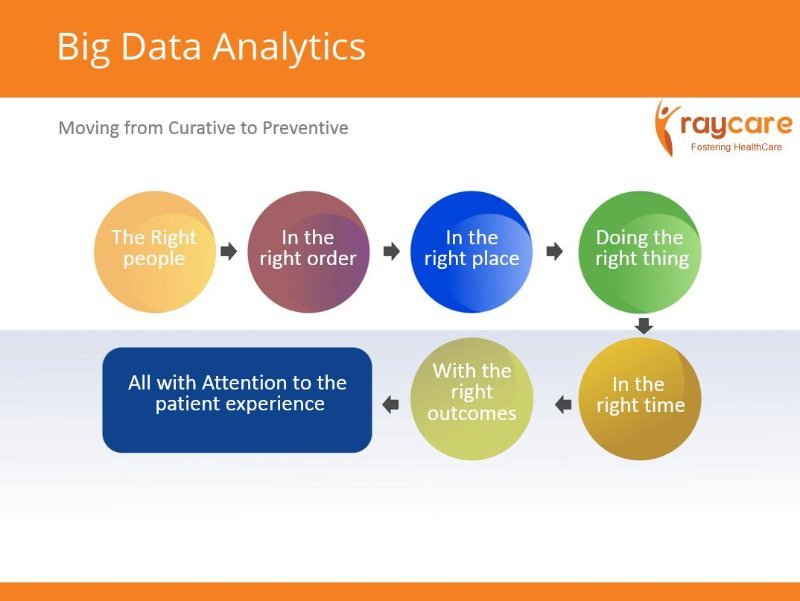
How Does Healthcare Data Analytics Improve Clinical and Operational Performance?
When implemented across a unified data infrastructure, Healthcare Data Analytics delivers measurable improvement across four operational domains:
-
Clinical decision support: Pattern recognition across patient histories, diagnostic results, and population data surfaces insights that inform treatment selection, drug interaction checks, and care pathway optimization.
-
Operational efficiency: Analytics applied to supply chain data, staffing schedules, and facility throughput identifies waste, reduces resource duplication, and improves asset utilization across hospital operations.
-
Error reduction: Human errors in prescription, diagnostic coding, and billing — which carry both patient safety and financial risk — are reduced through automated anomaly detection and cross-system validation.
-
Population health management: Aggregated analytics across patient populations identifies high-risk cohorts, enables targeted preventive interventions, and supports value-based care contract performance measurement.
How does healthcare data analytics improve hospital operations?
Healthcare data analytics identifies trends, improves decision-making, optimizes resources, and reduces medical errors.
How Can XenonStack Help with Healthcare Data Analytics?
XenonStack has a perfect solution for the healthcare industry: RayCare.
RayCare is an Integrated Healthcare Platform That Starts by Connecting Doctors, Labs, Medicine, and Dieticians and providing healthy Life Tips.
It then creates Health Profiles, Medical Reports, Daily Health Tracking, Predictive Diagnostic Analytics, and Second-Option Consultation and recommendations.
As discussed above, the healthcare industry is getting benefited from advanced analytics to make better predictive decisions with unbiased data.
XenonStack is a leading Company providing Big Data Analytics Solutions that helps enterprises implement analytics solutions for large datasets with advanced analytics.
To implement a Big Data Analytics Solution Strategy in your organization, you are advised to take below steps:
- Discover how to Build Predictive Analytics in Healthcare
- Get in Touch with us for Big Data Analytics Services and Solutions
What solutions does XenonStack provide for healthcare data analytics?
XenonStack provides big data analytics platforms and healthcare solutions like RayCare that enable predictive healthcare analytics and digital health insights.
What Business Outcomes Should Healthcare Data and Analytics Leaders Measure?
- Data interoperability coverage: Percentage of patient data sources connected to a unified analytical layer — the foundational metric for healthcare analytics maturity
- Clinical decision support utilization rate: Frequency with which analytics-generated recommendations are accessed and applied by clinicians — measures the operational adoption of analytical capabilities
- Predictive model accuracy by use case: Precision and recall metrics for readmission risk, deterioration prediction, and disease progression models — the clinical performance benchmark for AI investments
- Operational cost per analytics insight: Total cost of data infrastructure and analytics operations divided by actionable findings generated — the efficiency metric for CDO and analytics investment justification
- EHR data quality score: Completeness, consistency, and coding accuracy across electronic records — the data governance metric that predicts the reliability of all downstream analytics
Conclusion: Why Healthcare Data Analytics Is Critical for Modern Healthcare Systems
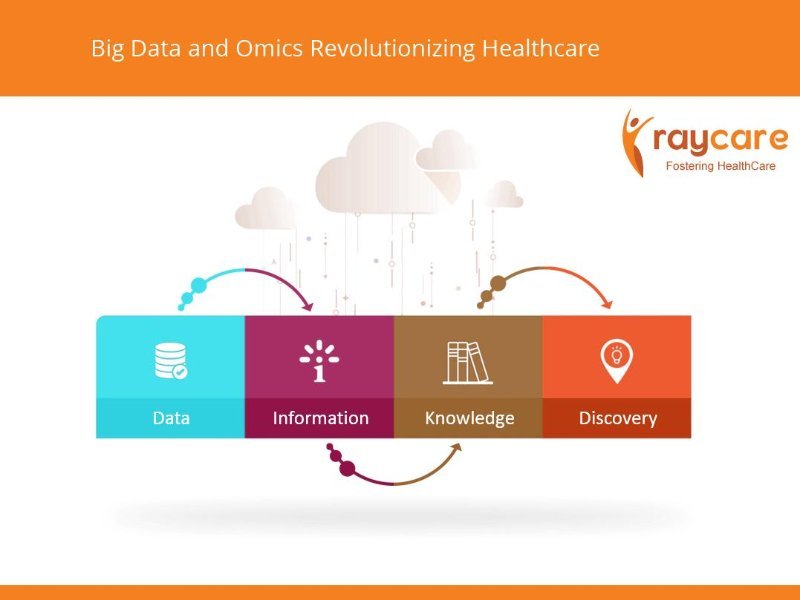
Healthcare data is growing at an unprecedented pace, and without the right analytical capabilities, much of this information remains underutilized. Healthcare Data Analytics enables organizations to transform vast volumes of medical data into actionable insights that improve patient care, operational efficiency, and clinical decision-making.
By leveraging technologies such as predictive modeling, real-time analytics, and data-driven decision frameworks, healthcare providers can move beyond reactive treatment toward proactive and personalized healthcare. From improving hospital operations and reducing medical errors to enabling better research and population health management, healthcare data analytics plays a crucial role in shaping the future of healthcare systems.
As healthcare ecosystems continue to digitize and generate more complex datasets, adopting advanced analytics platforms and interoperable data infrastructures will become essential. Organizations that effectively harness healthcare data analytics will be better positioned to deliver high-quality care, optimize resources, and drive innovation across the healthcare industry.
As discussed above, the healthcare industry is getting benefited from advanced analytics to make better predictive decisions with unbiased data. XenonStack is a leading Company providing Big Data Analytics Solution that helps enterprises Implement analytics solutions for large datasets with Advanced Analytics. To implement a Big Data Analytics Solution Strategy in your organization, you are advised to take below steps: