Key takeaway
- Use machine learning to see which marketing channels drive sales, cut acquisition cost and focus retention on at-risk customers with advertising analytics.
Advertising analytics uses machine learning to show which marketing channels, online or offline, actually drive sales, what each channel returns and how satisfied customers are with the brand. It replaces broad, hard-to-measure campaigns with targeted spend, which lowers the cost of acquiring and retaining customers.
What is advertising analytics?
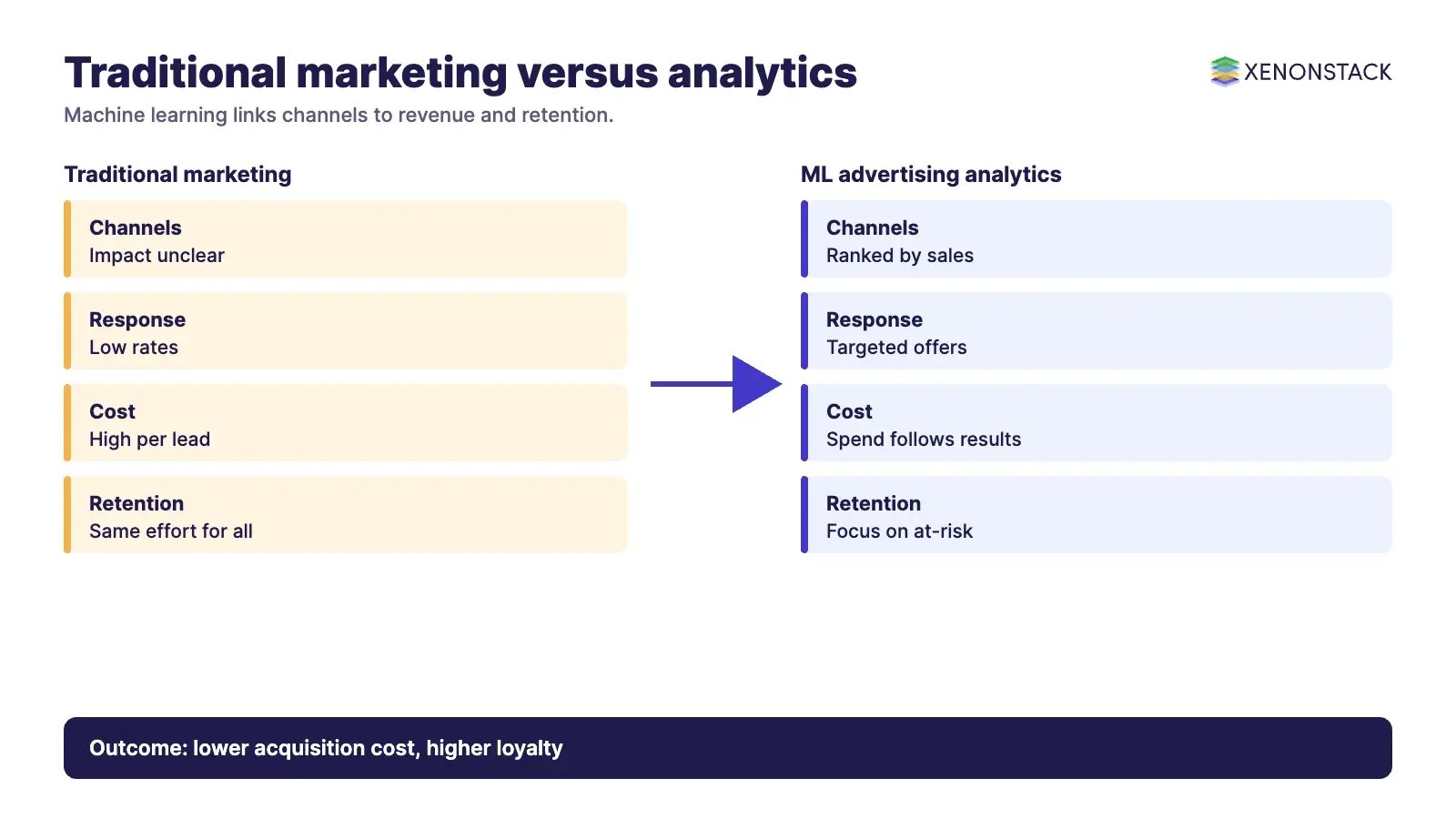
Advertising analytics is the practice of measuring marketing activity against revenue, conversion and customer satisfaction so that budgets follow results. Traditional approaches make it hard to attract customers and often produce low response rates, which pushes up the cost of each lead and each acquisition.
Why does marketing need machine learning?
Marketers and advertisers must work out which drivers move the result, so that limited resources go where they matter. Winning new customers is only half the task, because keeping existing customers is just as important. Retention teams cannot give every customer the same attention, so they need a way to see who is most at risk.
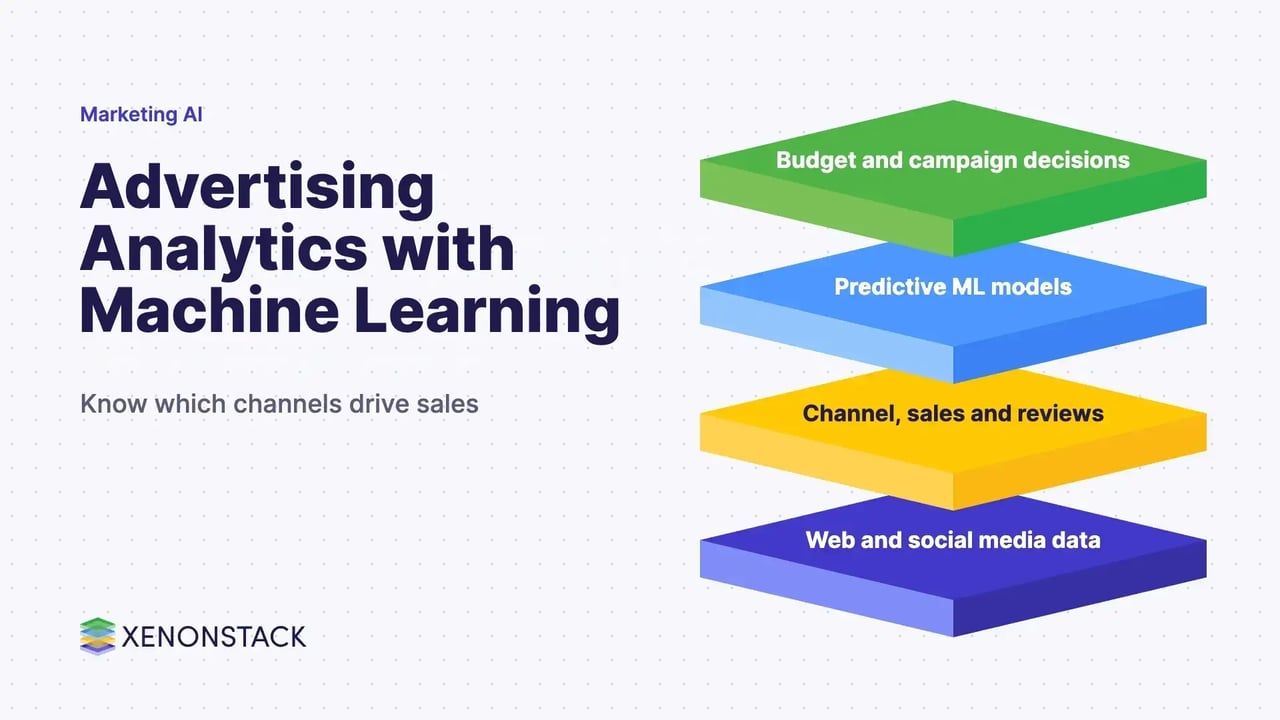
Machine learning provides that view. It can show which channel contributes most to sales and which contributes least, calculate return on investment more accurately, and point retention effort at the customers most likely to leave. See also how AI in marketing and advertising applies across the wider function.
How does a marketing analytics solution work?
The solution gathers customer reviews, social media data and data generated through websites, then applies machine learning to link activity to outcomes. Teams can use it in three ways.
- Identify the offline and online channels that contribute most to sales and those that contribute least.
- Focus service and special offers on customers at greatest risk of leaving, to keep them loyal.
- Grow customer satisfaction and customer numbers together, which builds sales, profit and brand value.
What does the advertising analytics dashboard show?
XenonStack built a sample dashboard to illustrate the approach. Its readings come from sample data, so they are described here in words rather than quoted as results.
| Dashboard element | What it shows | Decision it supports |
|---|---|---|
| Revenue by category | Which product category generates the most revenue, and how customers reach the brand through social media | Where to concentrate marketing budget |
| Customer satisfaction | How happy customers are with services and the brand | Whether to invest in retention or service |
| Conversion rate | How many engaged prospects become customers | Which campaigns to scale or stop |
| Predictive line charts | Forecast conversion and satisfaction over time | Planning campaigns ahead of the season |
When should a business invest in advertising analytics?
The case is clearest when acquisition costs are rising, response rates are falling or leaders cannot say which channels earn their budget. It is equally relevant when retention teams are stretched and need to prioritise accounts. In these situations, a prediction model gives marketing and finance a shared, evidence-based view of performance.
How does XenonStack help?
XenonStack builds prediction models that estimate customer satisfaction and revenue for the year and report on channel performance, revenue by channel and satisfaction with the brand. The insight is delivered through agentic analytics, so marketing leaders can ask questions in plain language and trust the data behind the answer.
To test this against your own channel and customer data, book a Context Workshop with our team.
Frequently asked questions
What is advertising analytics?
Advertising analytics measures marketing activity against revenue, conversion and customer satisfaction so that budgets can follow results. Machine learning shows which channels contribute most to sales.
How does machine learning lower acquisition cost?
It shows which online and offline channels contribute most and least to sales, so spend moves to the channels that work and away from those that do not.
How can analytics help with customer retention?
Models can flag the customers most at risk of leaving, so retention teams can focus limited time and special offers where they matter most.
What data does an advertising analytics model use?
It can use customer reviews, social media data and data generated through websites, combined with sales and channel records.
Are the sample dashboard figures real results?
No. The dashboard uses sample data to show the views available. Results for your business depend on your own data and should be validated before use.
Ready to put AI agents to work? See an ElixirClaw demo: the agentic OS to build, orchestrate and govern AI agents across your enterprise systems.
Explore the XenonStack platform family: ElixirData · ElixirClaw · ElixirHub · NexaStack · MetaSecure · Neural AI · AgentGRC · AgentSRE · AgentAnalyst · AgentInstruct · AgentRAI · AgentScrum · AgentSearch · AgentForce · AI Aviator · SAIF Aviator · CohortIQ · XenonStack AI · XenonStack UAE