Key takeaway
- Network security analytics turns logs and flows into findings. See how feature engineering, correlation, anomaly detection and threat intel fit together.
Network security analytics collects and analyses network and system data to detect threats, so that analysts see suspicious activity early and in context. It combines feature engineering, correlation, anomaly detection, threat intelligence and automated learning in one monitoring platform.
This page is for security and platform leads who are building or reviewing a network security monitoring solution. It covers the problem, the four building blocks, how they work together, where AI agents fit and what to check before you adopt a platform.
What is network security monitoring and analytics?
Network security monitoring watches traffic and logs for signs of attack. Analytics turns that raw data into findings. NIST defines a security information and event management (SIEM) tool in its glossary as an application that provides the ability to gather security data from information system components and present it in a form that can be acted on from a single access point.
What problem does it solve?
In cybersecurity and threat intelligence there are many points to cover, and a gap in intelligence can end in the loss of confidential information. Building a monitoring and analytics solution is challenging because it has to address several network security concerns at once and help overcome security threats before they spread.
- Data arrives from many devices and systems in different formats.
- A single event rarely shows an attack; the pattern across events does.
- Analysts need current threat knowledge next to the evidence.
- Detection rules need to keep learning as attacker behaviour changes.
How does a network security analytics platform work?
The platform is built around four focus areas. Each handles one part of turning raw network data into a decision. NIST SP 800-92, the Guide to Computer Security Log Management, is a useful reference for the log management that sits underneath them.
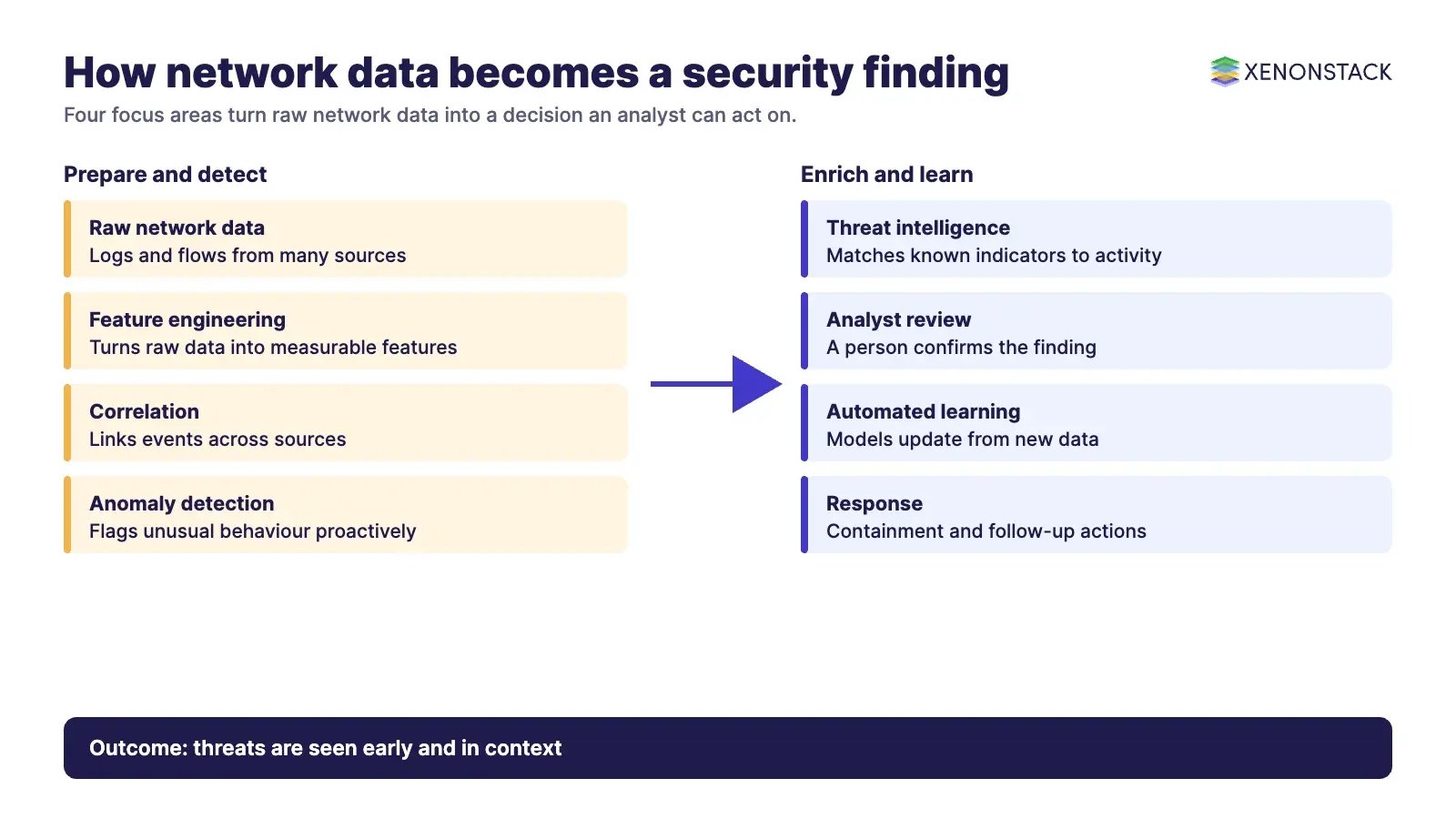
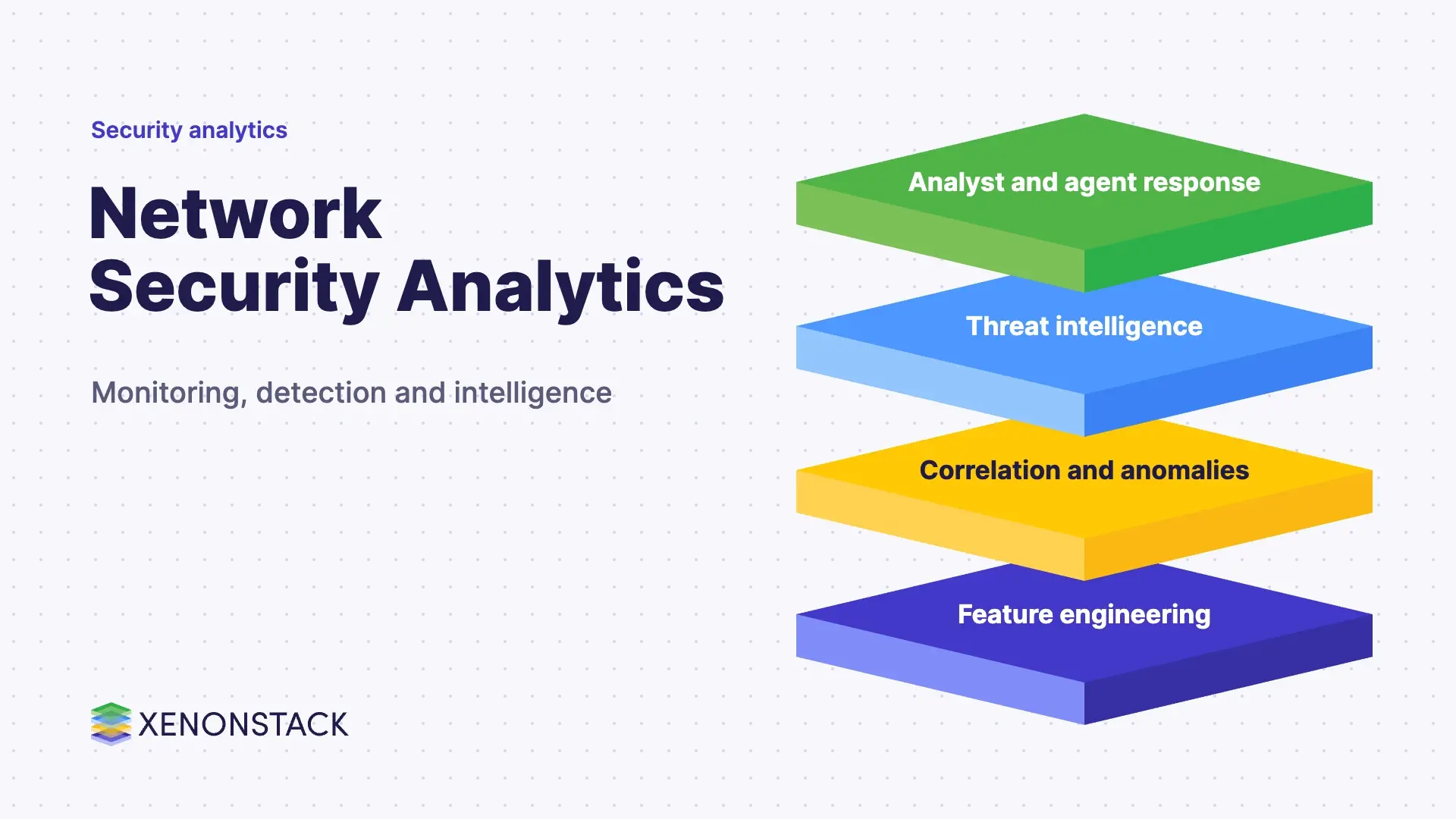
- Feature engineering. Raw logs and flows are turned into measurable features, such as counts, rates and relationships between hosts, that models can use.
- Correlation and anomaly detection. Events are linked across sources and unusual behaviour is flagged, so teams take proactive steps instead of reacting after the damage.
- Threat intelligence. Known indicators and attacker techniques are matched against what the network is seeing.
- Automated learning. Models are updated as new data and analyst feedback arrive.
How does this differ from traditional log monitoring?
| Question | Rule-based log monitoring | Security analytics platform |
|---|---|---|
| Detection basis | Fixed rules and signatures | Features, correlation and anomaly models |
| Context | One event at a time | Events linked across sources |
| Threat knowledge | Updated by hand | Threat intelligence matched to activity |
| Adaptation | Rules rewritten by analysts | Models learn from new data |
Where do AI agents fit?
AI agents can take the first pass on an alert: gather the related events, check them against threat intelligence and prepare a case for an analyst to approve. Because agents act on security data, the data they use and the policies they follow need to be governed. ElixirClaw is XenonStack's AI agents computing platform for running such agents.
What should you check before adopting one?
- List the data sources you must cover and who owns each one.
- Define which detections matter most and how you will judge them.
- Decide how analyst feedback flows back into the models.
- Set retention and access rules for the logs you collect, using a log management guide such as NIST SP 800-92.
- Pilot on one network segment and review false alerts before widening scope.
To map one decision your agents make from security data, and the policy it depends on, book a Context Workshop. See what happens in the workshop.
Frequently asked questions
What is network security analytics?
It is the collection and analysis of network and system data to detect threats, using correlation, anomaly detection and threat intelligence.
What is a SIEM tool?
NIST describes it as an application that gathers security data from information system components and presents it in a form that can be acted on.
Why is feature engineering important in security analytics?
Models cannot use raw logs directly, so features such as counts, rates and host relationships make patterns measurable.
How does correlation help detect attacks?
One event rarely shows an attack. Linking events across sources reveals the pattern that points to one.
Where do AI agents fit in security monitoring?
Agents can gather related events, check them against threat intelligence and prepare a case for an analyst, working from governed data.
Ready to put AI agents to work? See an ElixirClaw demo: the agentic OS to build, orchestrate and govern AI agents across your enterprise systems.
Explore the XenonStack platform family: ElixirData · ElixirClaw · ElixirHub · NexaStack · MetaSecure · Neural AI · AgentGRC · AgentSRE · AgentAnalyst · AgentInstruct · AgentRAI · AgentScrum · AgentSearch · AgentForce · AI Aviator · SAIF Aviator · CohortIQ · XenonStack AI · XenonStack UAE