Key takeaway
- Learn how machine learning predicts insurance claims, cost and customer satisfaction on real-time data, and what a claims dashboard shows leaders.
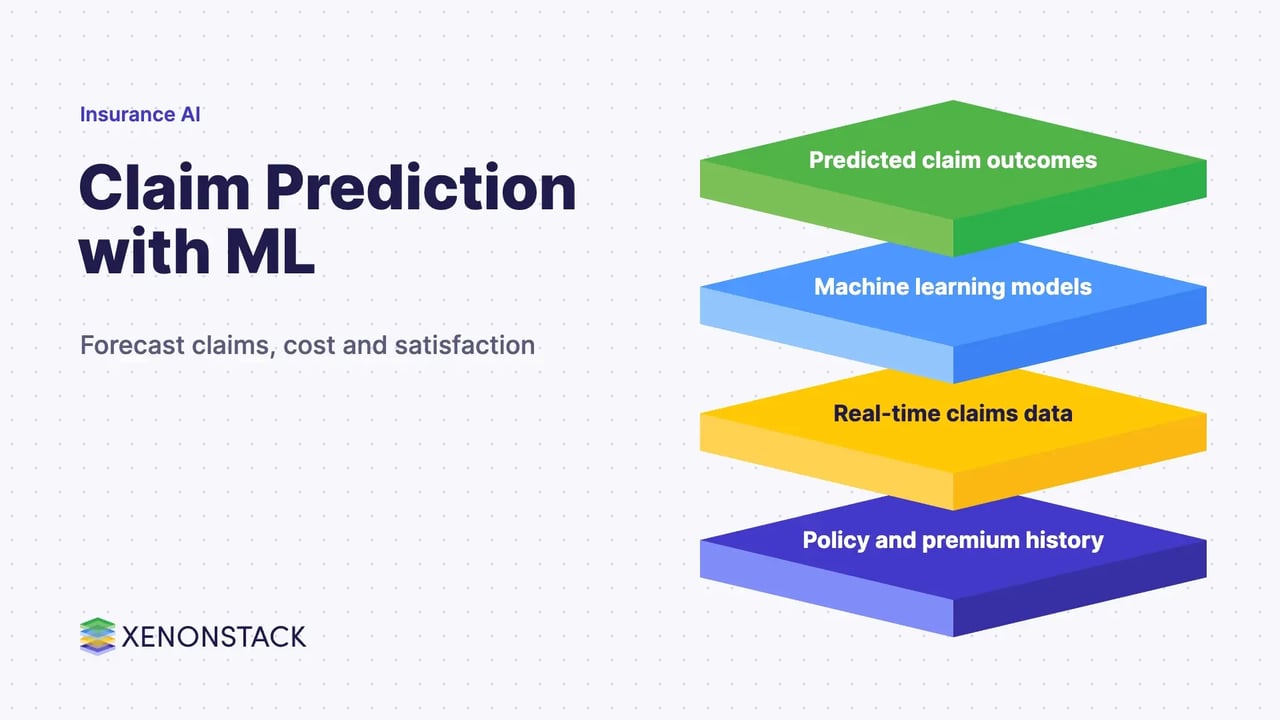
Insurance claim prediction uses machine learning on historical policy, premium and claims data to estimate how many claims will arrive, what they will cost and how satisfied customers are likely to be. It gives insurers an earlier, evidence-based view of incurred loss and claim status, so decisions on pricing, reserving and service can be made before problems surface.
What is insurance claim prediction?
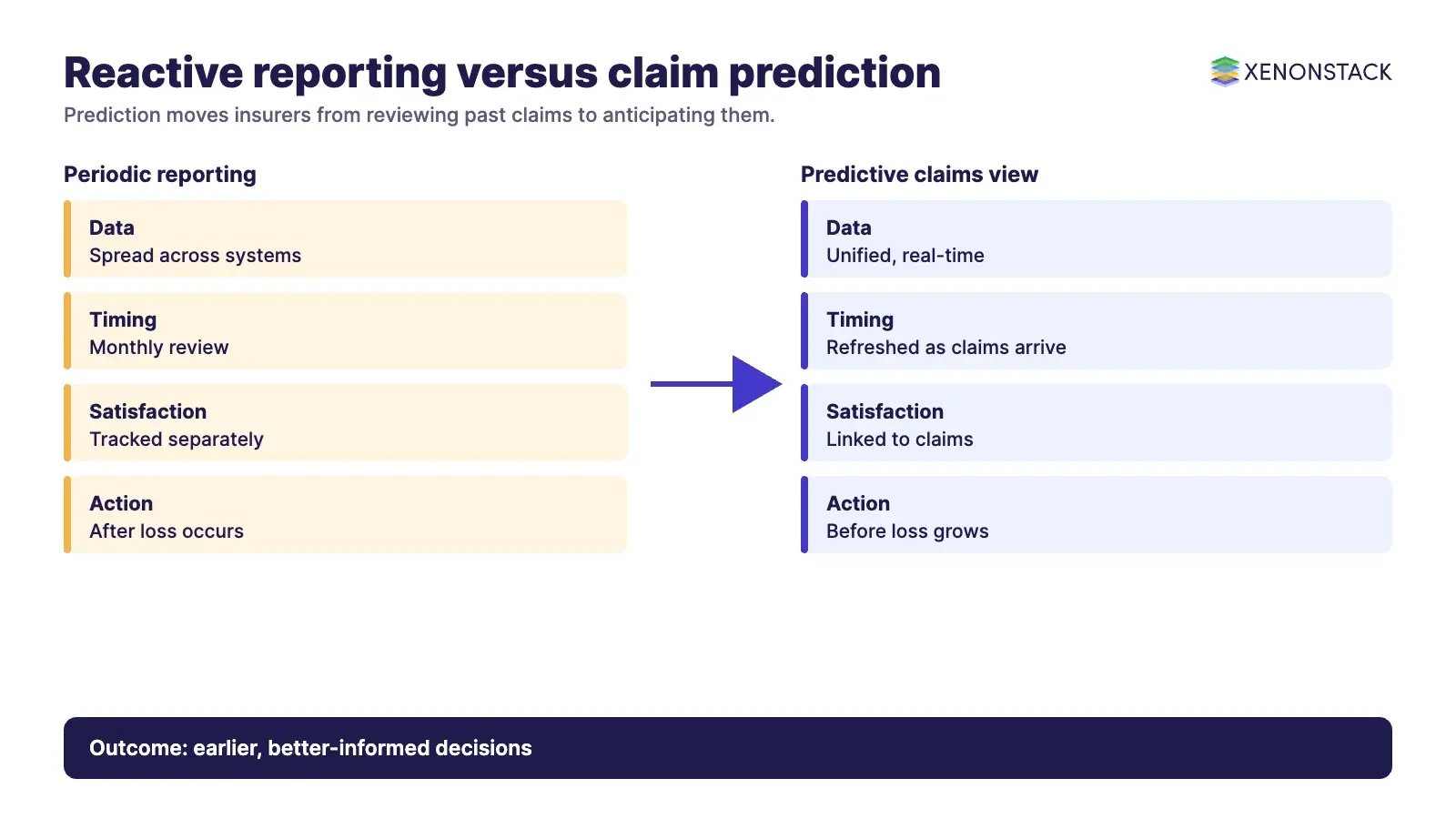
Insurance claim prediction is the use of predictive models to forecast claim volumes, claim values and customer satisfaction from the data an insurer already holds. Rather than waiting for monthly reports, leaders see where claims are concentrated, which insurance types drive loss and how premiums relate to the satisfaction of policyholders.
How does a machine learning model predict claims?
The model learns patterns from historical records such as policy type, premium paid, claim type, claim status and settled amount. It then scores current and new activity against those patterns. Because it can run on real-time data, the predictions refresh as new claims arrive instead of ageing in a spreadsheet.
Historical data can come from internal systems and from accessible open-source data sets, which is useful when an insurer wants to test a model before connecting production sources.
What does a claim prediction dashboard show?
A sample dashboard built by XenonStack illustrates the views an insurance leader typically needs. The readings on it are illustrative values from sample data, so they are described here in words rather than quoted as benchmarks.
| Dashboard view | What it shows | Decision it supports |
|---|---|---|
| Claim types | The share of claims by business line, alongside customer satisfaction | Where to focus underwriting and claims capacity |
| Premium and satisfaction by month | How premium status and satisfaction move over time | Whether pricing changes are affecting customer sentiment |
| Claim status and loss | Open, settled and rejected claims and loss by insurance type | Reserving and loss-ratio management |
| Predicted outcomes | Forecast claim status and satisfaction for each customer | Proactive service and early intervention |
When should an insurer adopt claim prediction?
The case is strongest when three conditions are present.
- Claims data sits across several systems and is reviewed only in periodic reports.
- Leaders need to see incurred loss and claim status before they commit to pricing or reserving decisions.
- Customer satisfaction is tracked separately from claims, so cause and effect are hard to see.
Where these apply, a predictive model brings claims, premiums and satisfaction into one view and gives teams a shared basis for action.
How does XenonStack support claim prediction?
XenonStack builds predictive models on real-time data so that an insurer can understand claims, cost, premium and satisfaction together. Governed context for those models comes from ElixirData, and the resulting insight is delivered through agentic analytics that leaders can query in plain language. The models are designed to give an accurate view of each customer, their claim amount and claim status, with a narrative that explains the result.
To see how this would work on your own claims data, book a Context Workshop with our team.
Frequently asked questions
What is insurance claim prediction?
Insurance claim prediction is the use of machine learning to forecast claim volumes, claim values and customer satisfaction from historical and real-time insurance data. It helps insurers act on incurred loss and claim status earlier.
What data does a claim prediction model need?
A model needs historical policy, premium and claims records, including claim type, status and amount. Open-source data sets can support early testing before production systems are connected.
Can claim prediction improve customer satisfaction?
Yes. When claims, premiums and satisfaction are viewed together, teams can spot customers likely to be dissatisfied and intervene early with faster or clearer service.
Does the model run on real-time data?
Yes. Models can be built on real-time data so that predictions refresh as new claims arrive, rather than relying on periodic batch reports.
Are the figures on the sample dashboard benchmarks?
No. The sample dashboard uses illustrative data to show the views available. Results for your business depend on your own data and should be validated before use.
Ready to put AI agents to work? See an ElixirClaw demo: the agentic OS to build, orchestrate and govern AI agents across your enterprise systems.
Explore the XenonStack platform family: ElixirData · ElixirClaw · ElixirHub · NexaStack · MetaSecure · Neural AI · AgentGRC · AgentSRE · AgentAnalyst · AgentInstruct · AgentRAI · AgentScrum · AgentSearch · AgentForce · AI Aviator · SAIF Aviator · CohortIQ · XenonStack AI · XenonStack UAE