Key takeaway
- Learn how AI and machine learning predict vehicle maintenance, fuel and operating cost on real-time data, and what a logistics dashboard shows leaders.
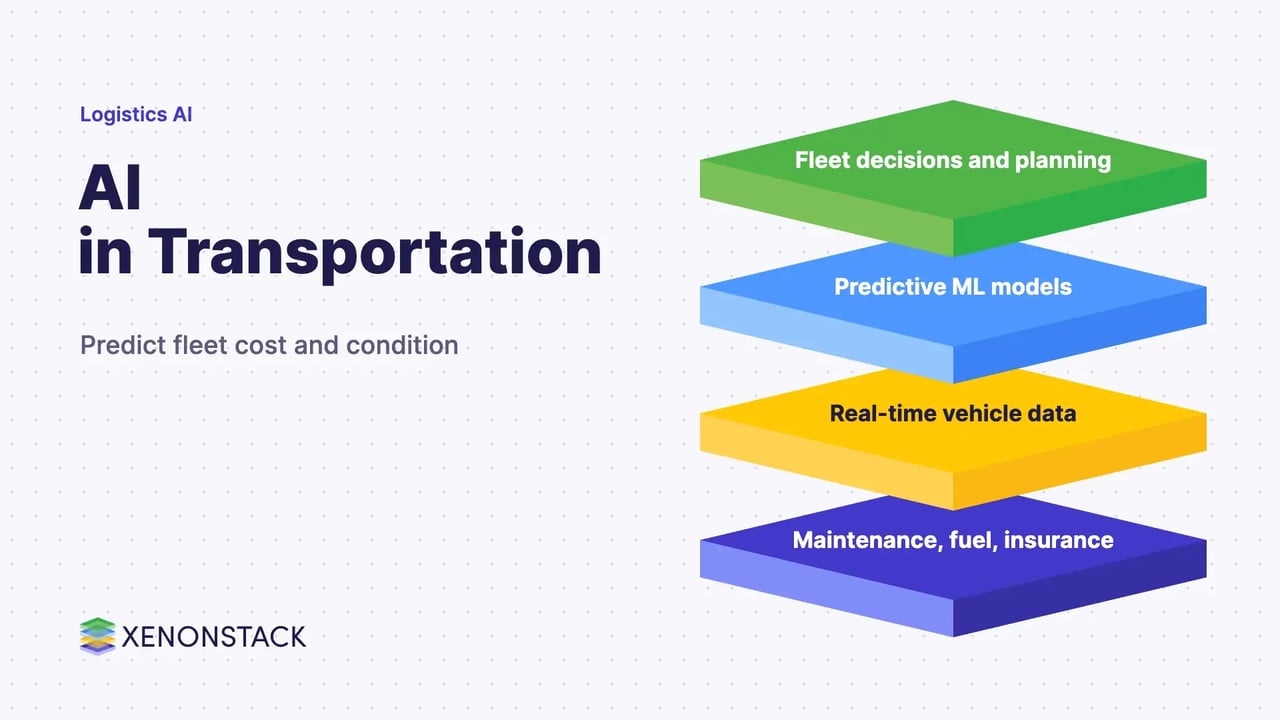
AI in logistics and transportation uses machine learning on real-time fleet data to predict vehicle maintenance, fuel cost and operating cost, and to show leaders the condition and usage of every vehicle in the fleet. It helps operators anticipate needs, automate routine processing and make better investment decisions across the transport network.
Why does logistics and transportation need AI?
Customers and operators in this sector need up-to-date information on fuel use, maintenance and vehicle condition across the life of each vehicle. They want real-time support for journeys, a proactive view of client needs and automation in processing. Leaders also want to see which vehicle types are used most and how insurance status differs between categories.
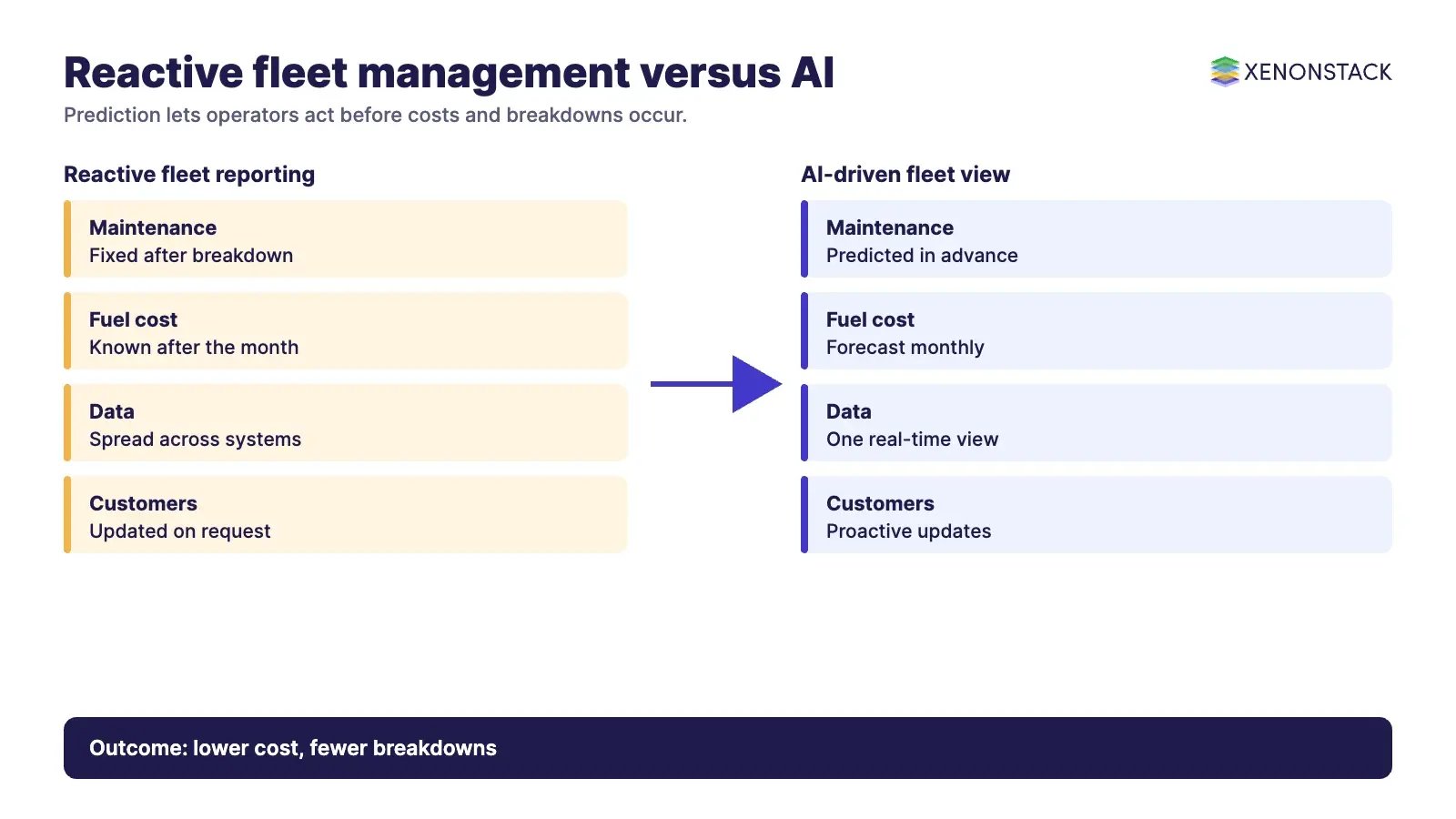
Machine learning models help by predicting these things, so that investment in transportation and logistics is guided by evidence rather than by periodic reports.
How does an AI model support the transportation sector?
XenonStack builds predictive machine learning models on real-time data. The model gives accurate information about a vehicle's life span and condition, and about the maintenance and fuel cost that follow. The data source comes from the transportation companies themselves, so results reflect the fleet being managed.
- Vehicle status and maintenance cost, tracked in one view.
- Fuel cost and order rate for each vehicle.
- Predicted maintenance and fuel cost month by month.
What does the logistics dashboard show?
XenonStack built a sample dashboard to illustrate the approach. Its readings come from sample data, so they are described in words here rather than quoted as results.
| Dashboard view | What it shows | Decision it supports |
|---|---|---|
| Fleet status and cost | The number of vehicles, their maintenance cost and the cost of fuel used | Budgeting and replacement planning |
| Orders by vehicle type | Which vehicle types carry the most orders, and the order rate for each vehicle | Fleet mix and utilisation |
| Insurance and operating cost | How the insurance charge and operating cost vary by month | Cost control and renewal timing |
| Vehicle condition | The share of vehicles in good condition, with predicted monthly maintenance and fuel cost | Proactive servicing before breakdowns |
When should an operator adopt AI analytics?
The case is strongest when a fleet is large enough that maintenance and fuel costs are material, when vehicle data sits in separate systems, or when breakdowns disrupt delivery commitments. It also applies when customers expect proactive updates on their journeys and the business must automate processing to keep pace.
How does XenonStack help?
XenonStack delivers predictions on vehicle services, performance and total fleet, together with a narrative that explains how the transport operation is working and who contributes to it. Governed context comes from ElixirData, and the insight reaches leaders through agentic analytics that they can query in plain language.
To test this on your own fleet data, book a Context Workshop with our team.
Frequently asked questions
How is AI used in logistics and transportation?
AI uses machine learning on real-time fleet data to predict vehicle maintenance, fuel cost and operating cost, and to show the condition and usage of each vehicle.
What data does a transportation AI model need?
It uses data from the transportation company itself, such as vehicle status, maintenance records, fuel use, orders and insurance information.
Can AI predict vehicle maintenance and fuel cost?
Yes. Predictive models can forecast maintenance and fuel cost month by month, which lets operators plan servicing before breakdowns occur.
Does it work on real-time data?
Yes. Models can be built on real-time data so that fleet status and predictions stay current instead of relying on periodic reports.
Are the dashboard readings real results?
No. The sample dashboard uses illustrative data to show the views available. Results for your fleet depend on your own data and should be validated before use.
Ready to put AI agents to work? See an ElixirClaw demo: the agentic OS to build, orchestrate and govern AI agents across your enterprise systems.
Explore the XenonStack platform family: ElixirData · ElixirClaw · ElixirHub · NexaStack · MetaSecure · Neural AI · AgentGRC · AgentSRE · AgentAnalyst · AgentInstruct · AgentRAI · AgentScrum · AgentSearch · AgentForce · AI Aviator · SAIF Aviator · CohortIQ · XenonStack AI · XenonStack UAE