Major Augmented Data Management Challenges Faced by Enterprises.
Issue Spotting
While downtime in the system occurs, most of the time organizations put their engineers to spot where the issue is. This takes lots of time and human resources.

Master Data Identification
Large organizations have several workloads where data has to be managed. Having different data platforms for different purposes creates chaos for the Data Stewards.

Data Quality
When there is too much data to manage, data quality is always at stake. Having no centralized documentation and data platform makes it difficult to automate.

How can Augmented Data Management Solutions help?

Solution to perform proof of concept on Operational and Master data to achieve business objectives.

Quick availability of all the related data saves time to raise the requests to the Data Team for access and then start to analyze.

Augmented solution helps to automate some Data Lineage patterns that are used throughout the organization.

Scalability effort to support the unconditional data sources helps Data Team to centralize the new products and the organization's efforts in the management of Data.

Features of the Augmented Data Management Solutions

Augmented Data Management gives data stewards control over the management of different data sets from across the organization.

Having access to master data helps the growth of the team to analyze the Data Patterns for Proof of concept.

Automate issue spotting if the system falls into some downtime.

Data Quality metrics can be improved with the passive approach of Data Transformation.

Data is centralized for access sharing with the teams across organizations.

Reduced human efforts and errors on similar issues if identified at other stages later in the product life cycle.
Augmented Data Management Implementation Strategy
-

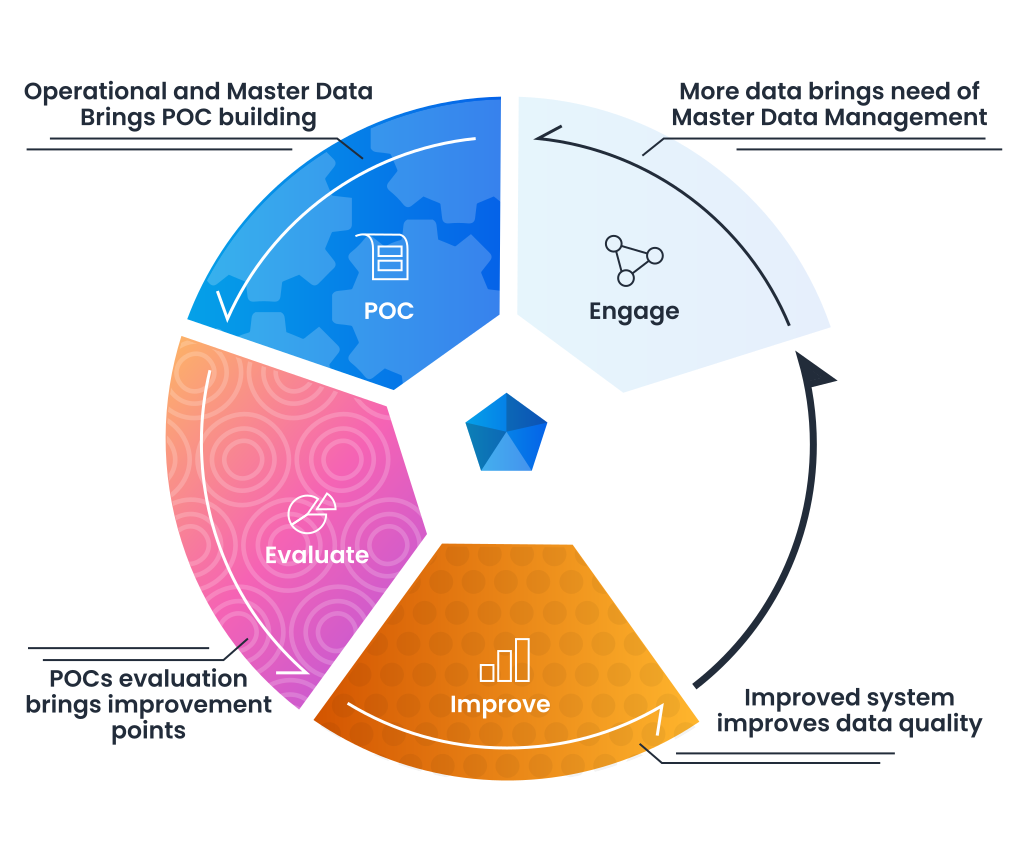
Engage: Start engaging the custom Tags and classification for different needs. This will help to locate the data quicker by the teams and needs.
-
Proof of Concept: Having the classification of Data enables better proof of concept for Analytics and Forecasting purposes.
-
Evaluate: When POC is finalized, then evaluation of the POC data can be done in the System.
-
Improve: It becomes easy to identify the improvement points on the POC data. More improvements bring Data Quality and Quick Decisions making.
What are the values added by the Solution?

Reduced Manual Operations let the Data team focus on identifying new KPIs and Metrics to evolve Data as a product growth.

Operational POC lets the Growth Team understand the scope of Customer experience without letting the process go into Production.

The Data Transformation process becomes easy for ETL developers to understand and how they can undertake the Pipeline development.

If more processes are engaged towards Augmented Data Management, Augmented Data Quality becomes much more effective to achieve.