Business challenges implementing Data Lake and Delta Lake
Unsafe Writing
In case, if a big ETL job fails, then data was written partially or not written at all.

Mismatch Schema
In case the data coming into the lake changes then there will be compatibility issues.

Data Versioning
No Data Versioning is provided by the data lake, due to which we can't go back to the previous version if required.

No Metadata Management
Data lake doesn't provide metadata management functionality itself.

Snapshot Isolation of Data
It helps concurrent read/write operations and enables efficient CRUD and rollback capabilities.

Schema Evolution
It has the functionality to upgrade the schema of the table according to need or change the schema of data coming in as required.

Data Versioning
Data stored in the lake is versioned and we can go back to the previous version if required.

Data Consistency
Data consistency is fulfilled, As there is functionality to have concurrent jobs writing and reading to/from the same data.

Metadata Handling
It enables us to keep track of the order of data and ultimately which helps in making Data lineage using external tools like Atlas.

ACID Properties
Delta lake fulfills the ACID properties, which means there is no problem or corrupted data.
Serves Schema Migration and Metadata Catalog Management
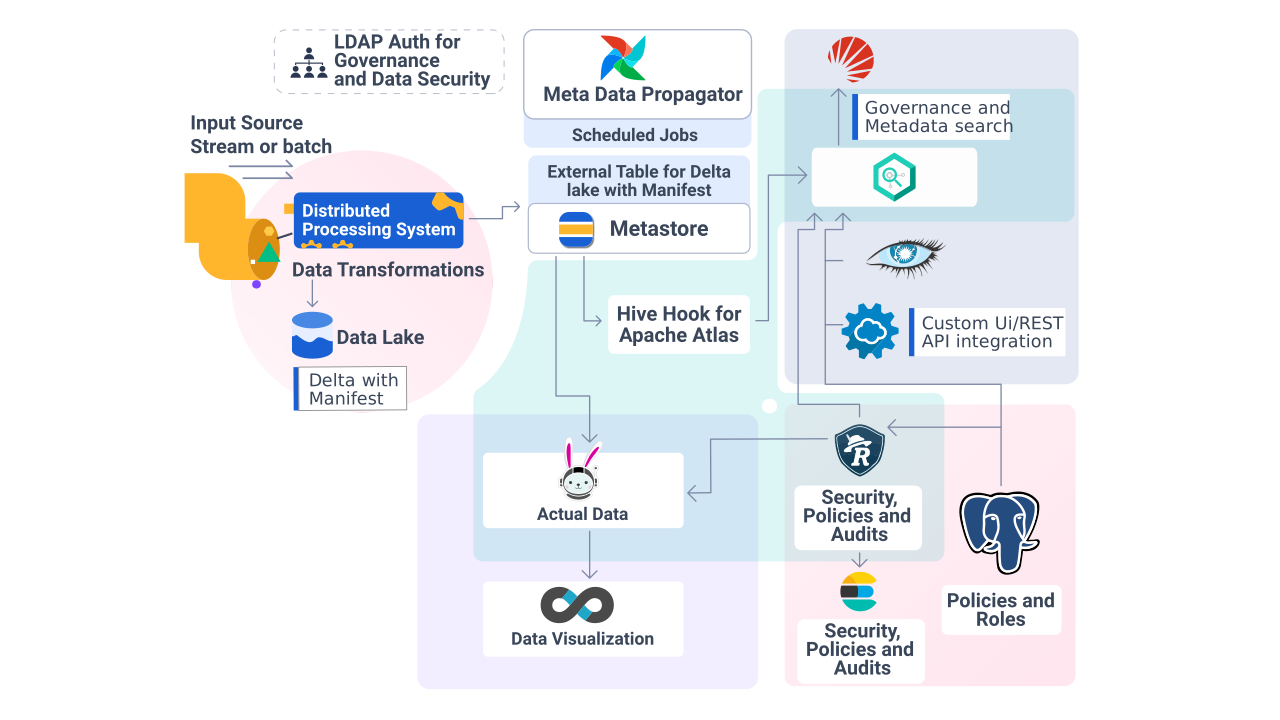
Serves Schema Migration and Metadata Catalog Management
ACID transaction: Delta lake fulfills the ACID properties, which means there is no problem or corrupted data.
Consistent data when mixing streaming and batch: If we do changes in business logic, we can assure that the data is consistent in both sinks.
Data versioning: Delta lake provide us with the functionality of versioning. Data is stored and versions of the same are created.
Metadata handling: With Delta, we can use the transaction log users to see metadata about all the changes that were applied to the data.