What is your Key focus areas? *
AI Workflow and Operations
Data Management and Operations
AI Governance
Analytics and Insights
Observability
Security Operations
Risk and Compliance
Procurement and Supply Chain
Private Cloud AI
Vision AI


Download as PDF

Share


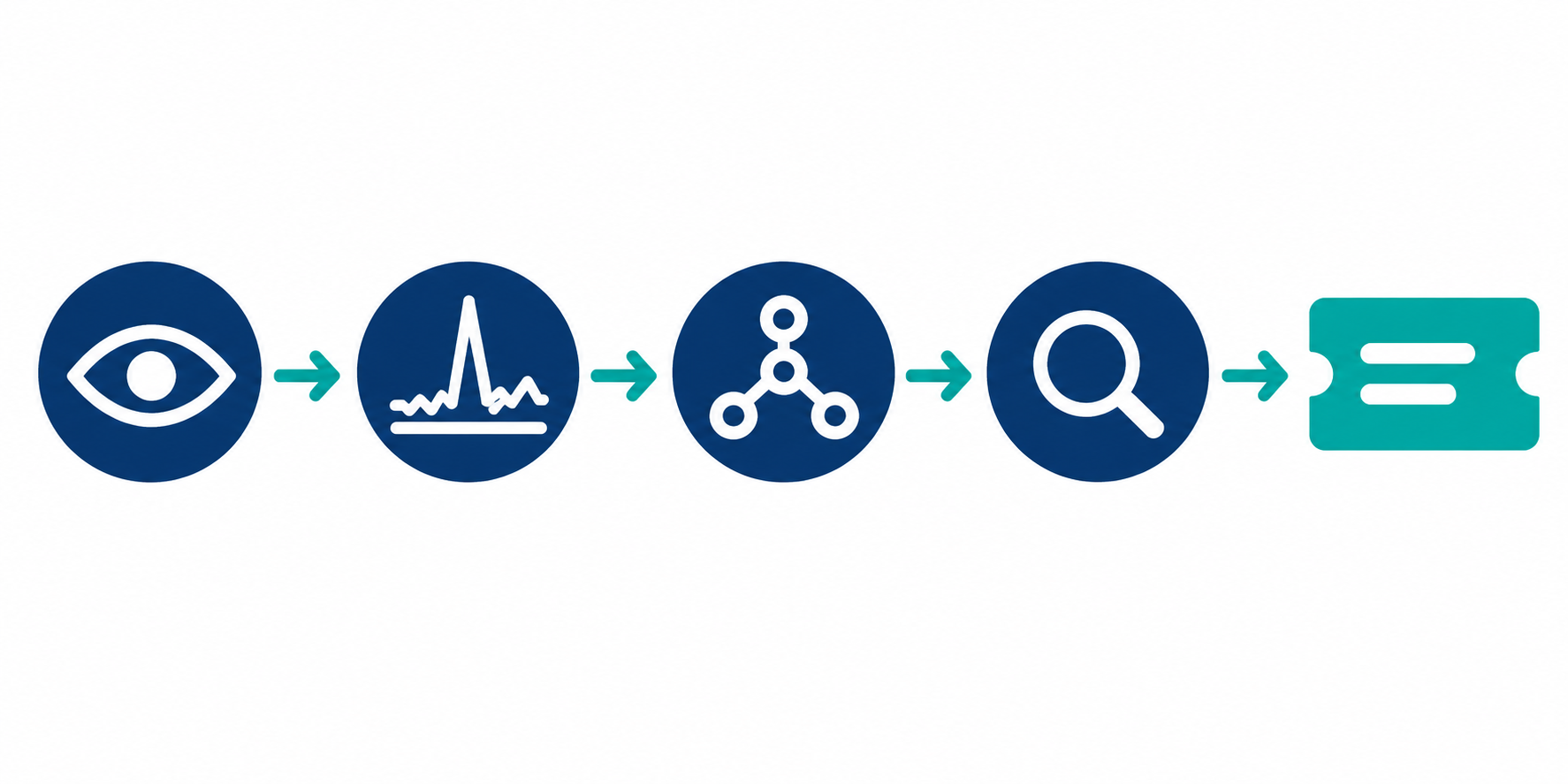
A large payments company wanted to know whether AI agents could take on the first hours of incident work: spotting anomalies, grouping related alerts and drafting the root-cause analysis. The test had to run on its own infrastructure, on the monitoring it already trusts, with no production data leaving its network. XenonStack ran a nine-week proof of concept with AgentSRE to find out.

Get Started with your requirements and primary focus, that will help us to make your solution
AI continuously monitors systems for risks before they escalate. It correlates signals across logs, metrics, and traces. This ensures faster detection, fewer incidents, and stronger reliability
 Proactive detection of performance and availability issues
 Root-cause analysis across microservices and environments
 Automated remediation playbooks to reduce MTTR

AI converts camera feeds into instant situational awareness. It detects unusual motion and unsafe behavior in real time. Long hours of video become searchable and summarized instantly
 Real-time detection of suspicious motion or intrusion
 Natural language video search and instant playback
 Smart summaries for audits, investigations, and compliance

Your data stack becomes intelligent and conversational. Agents surface insights, detect anomalies, and explain trends. Move from dashboards to autonomous, always-on analytics
 Connects to warehouses, lakes, and streaming sources
 Question-answering in natural language
 Continuous monitoring for anomalies and KPI deviations

Agents identify recurring failures and performance issues. They trigger workflows that resolve common problems automatically. Your infrastructure evolves into a self-healing environment
 Automated diagnostics for recurring errors
 Playbook execution: restart services, scale pods, clear queues
 Feedback loop for improving remediation strategies

AI continuously checks controls and compliance posture. It detects misconfigurations and risks before they escalate. Evidence collection becomes automatic and audit-ready
 Continuous control checks across infrastructure and SaaS
 Automated evidence collection for audits
 Risk scoring and prioritized remediation recommendations

Financial and procurement workflows become proactive and insight-driven. Agents monitor spend, vendors, and contracts in real time. Approvals and sourcing decisions become faster and smarter
 Real-time visibility into spend and commitments
 Anomaly detection on invoices and vendor performance
 Intelligent workflows for approvals and sourcing decisions


